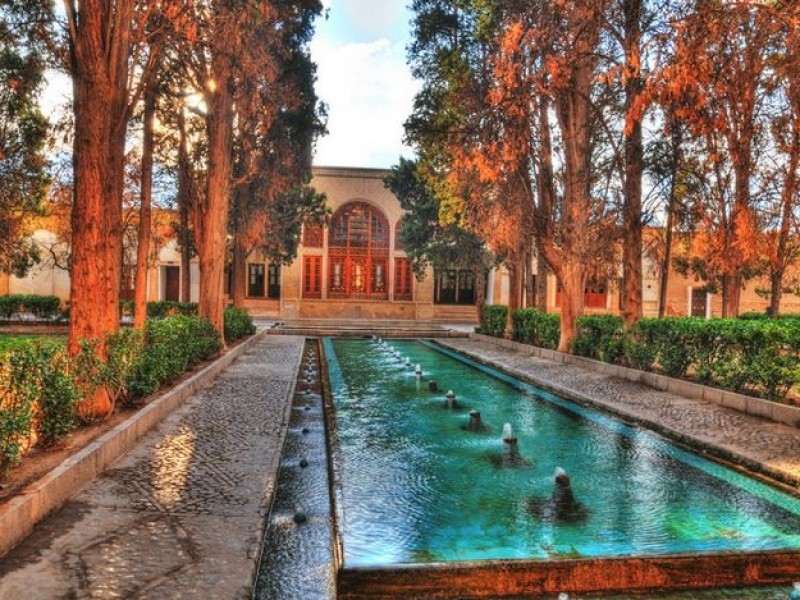
 Fin complex with all the traditional features and architectural landmarks is a historical complex that includes garden and bathroom are the attractions of the historic city of Kashan which is registered by UNESCO. Unique architecture of this complex that sets it among the most beautiful gardens of Iran.Water plays an important role in this garden and regardless of the amount of annual rainfall does not change, even in drought years.
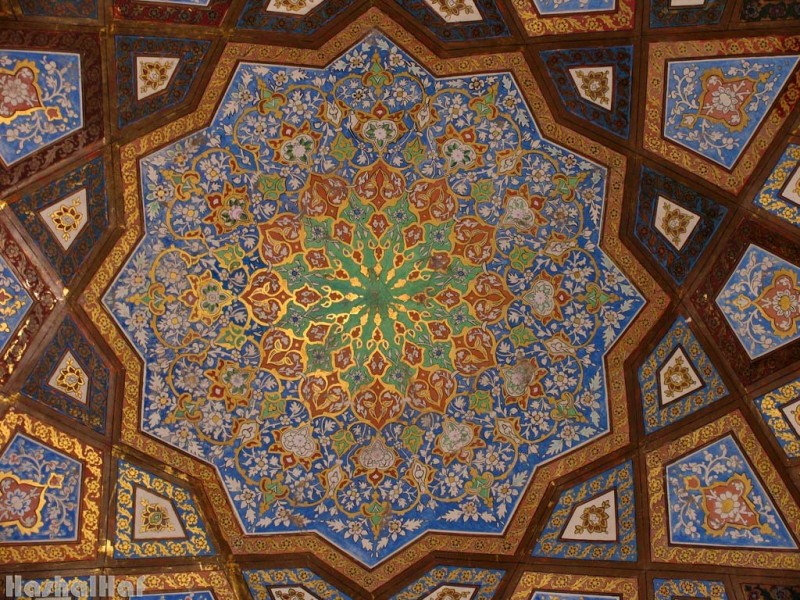 Its temperature is always 25 degrees Celsius and does not change in any season of the year.Pools and fountains with specific geometric shapes ,unique Iranian tiled and cypress and Platanus trees of this garden are as green gift in the heart of brown desert. in architecture of the building,It can be noted that to maintain the symmetry of the building and its perspective.
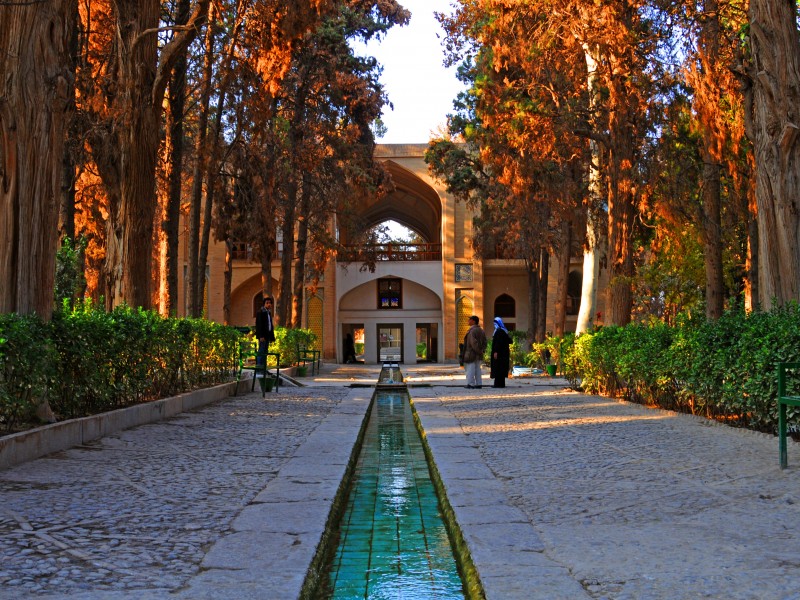 If you stand in the dock of the building’s entrance can see the end of Kashan. floor tiling are like Iranian carpet patterns.Due to mercury in the water seven colored light is created and make dreamy atmosphere after dealing with colored glass room.over the years and after spending a large earthquake in the area ,this garden has not been part from the damages.Unfortunately, Iranian and foreign architects have been unable to rebuild due to Still undiscovered calculations of making this beautiful and mysterious garden.
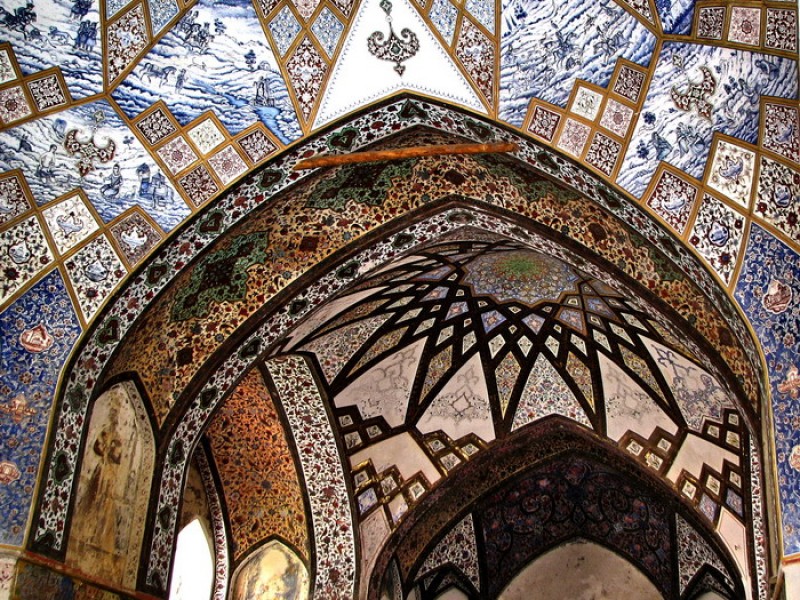
Fin bathroom:famous bath of this garden,that killed here, one of the greatest men of this land in the name of Amir Kabir .Maybe reminiscent of bitter memories for Iranian people,But simply can not be ignored from a unique architectural and social impact of the public baths.in the past,public bathroom apart from the place to clean was considering as place for such wedding ceremony like Hanabandan,Medical works like fractures(Bone replacement),Massage and an important social role in the gathering of people and have fun.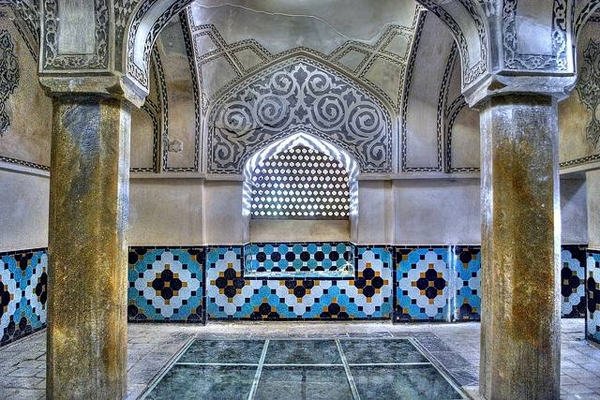
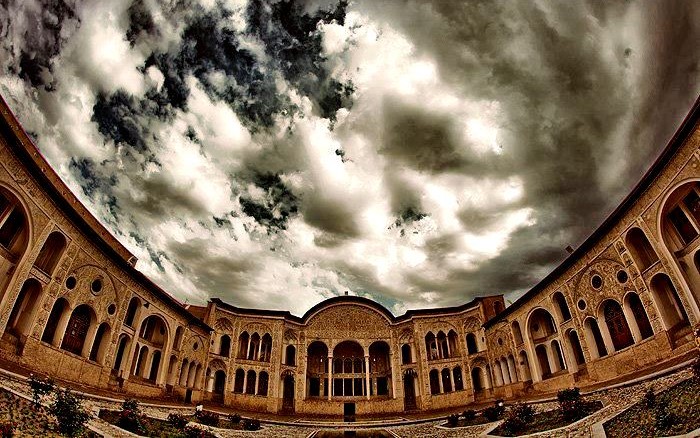 Tabatabaei House is one of the most beautiful traditional houses of Kashan that was built By Mr.Tabatabaei who was famous carpet businessman of this city about 200 years ago.Beautiful building with Iranian architecture and magnificent ornaments that fascinate you for hours.
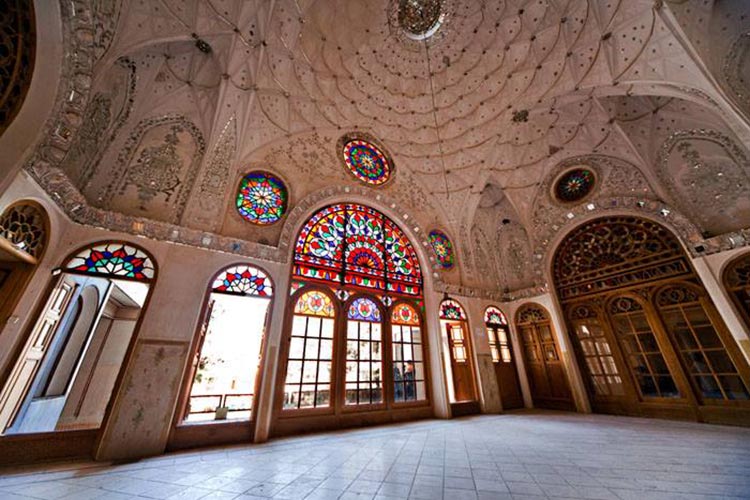 This home consists of 3 parts of inside and outside, and a special place for crew with 40 rooms,4 yards and basements,3 Badgir(windcather) and 2 Qanats that all of them according to climatic conditions of this region.
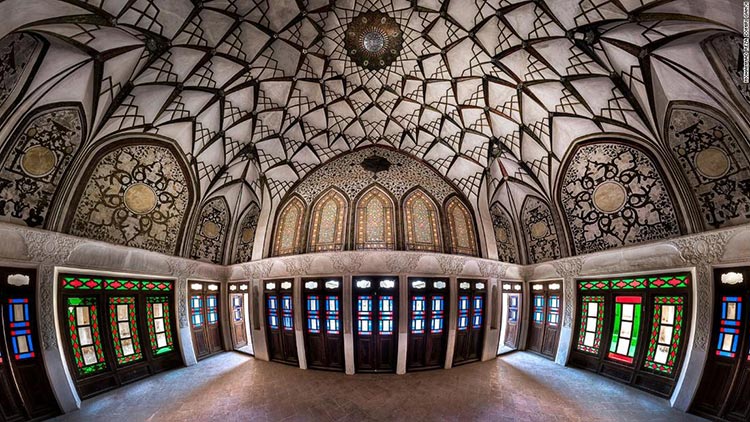 In the structure of Iranian Traditional houses you will encounter with interesting details like the interior and exterior of homes, which is perhaps indicate the two and different aspect of Persian moral characters in and out of home.
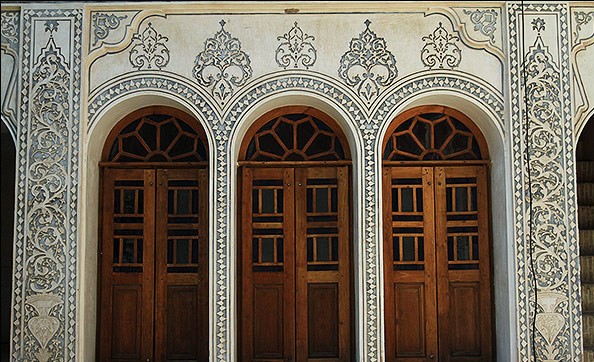 This unique building, near one of the city’s beautiful historic homes Boroujerdi’s house that belongs to the groom’s family that is interesting the story of this place also.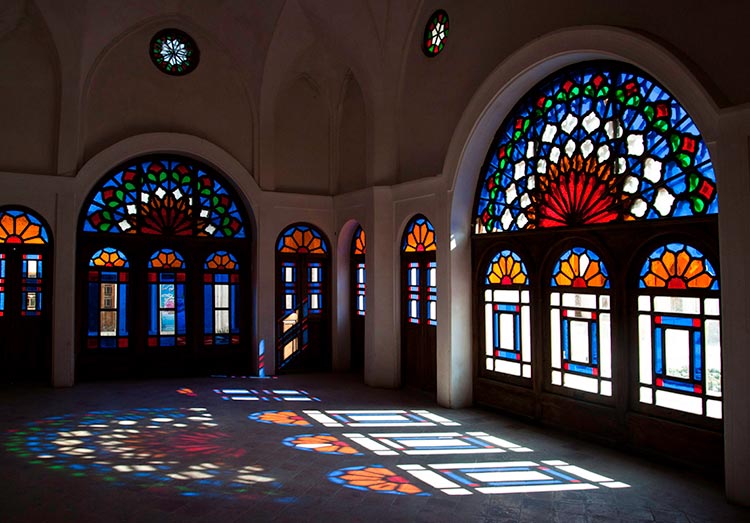
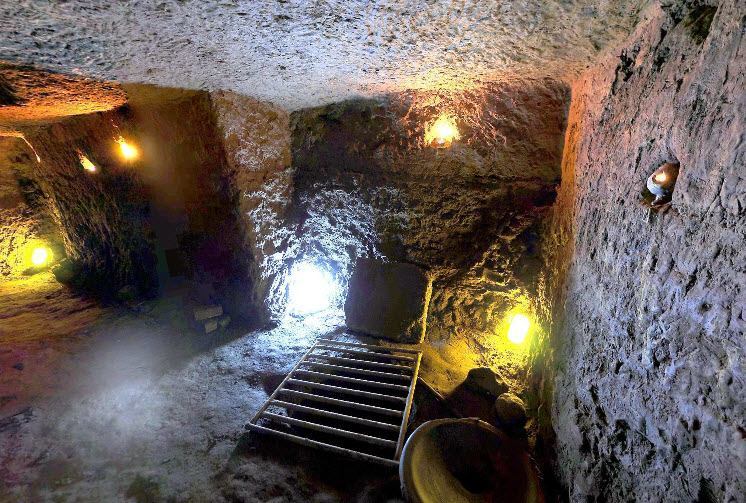 Nushabad Underground City, with one thousand and five hundred years’ record of homing and sheltering Families, is still stable!Close to Kashan City there is a mysterious underground city named Nooshabad or Ouyi! Nooshabad City concealing underground was built 1500 years ago, by order of Anushiruwān, Sassanid king. Three floors with strange Halls, food storages, water, Fat-burning lights and even toilets were constructed by hand digging of local people for long time residence of local people for protection against foes and invaders, but not for the normal life!
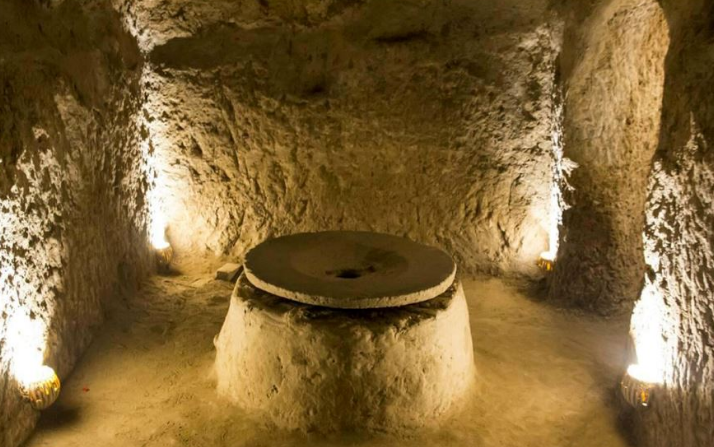 They would use it only in threatening situations. They have got a really fabulous and unique city engineering and road designs into use to prevent simple crossing in the footpaths, so that the invaders and foreign people and whoever was not familiar with this city constructions would lose easily its way, like a maze!Above some rooms in Anooshabad city is trapdoors with lids for emergency exits and enters. This city has two main enters, which one of them is hidden in a water store house.
 Ouyi City is built under ancient part of Kashan City and is extended even under the present city site. Exploring this city was accidentally by someone who wanted to dig a well in the yard of his house.In the depth of 3 to 18 meters under the normal level of ground, to pass through Ouyi/Anooshabad one cannot simply go straight! The main road is like a U and in different depth level! This path design would prevent offensives. This Unusual city with its surprising road map is one of the Adventural Attractions In Iran.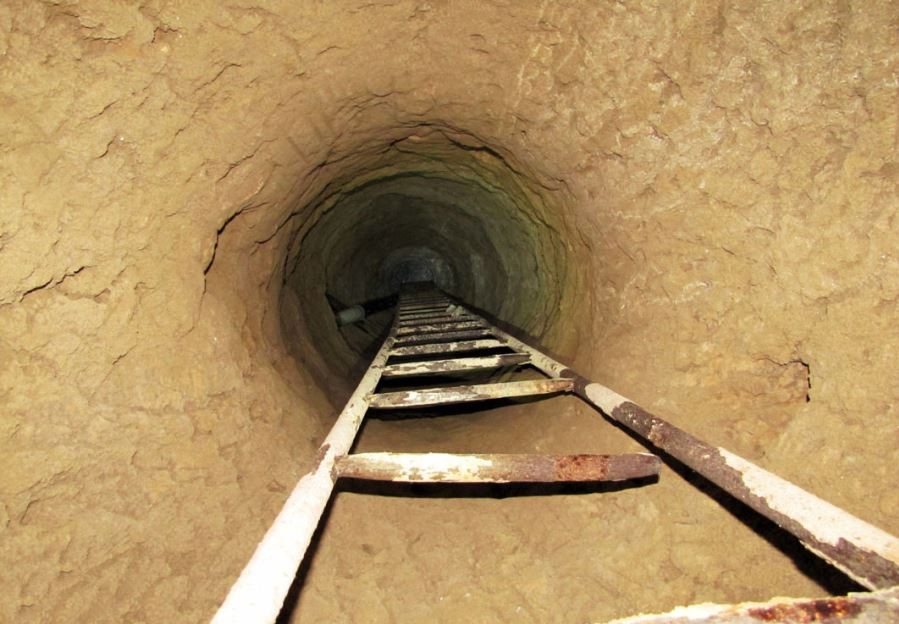
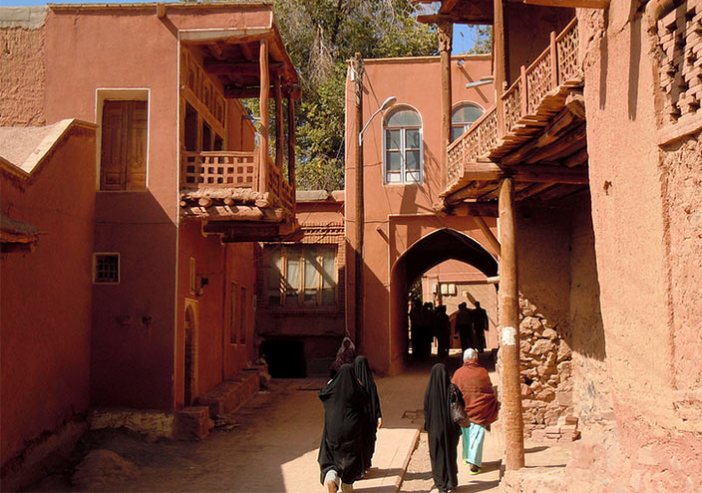
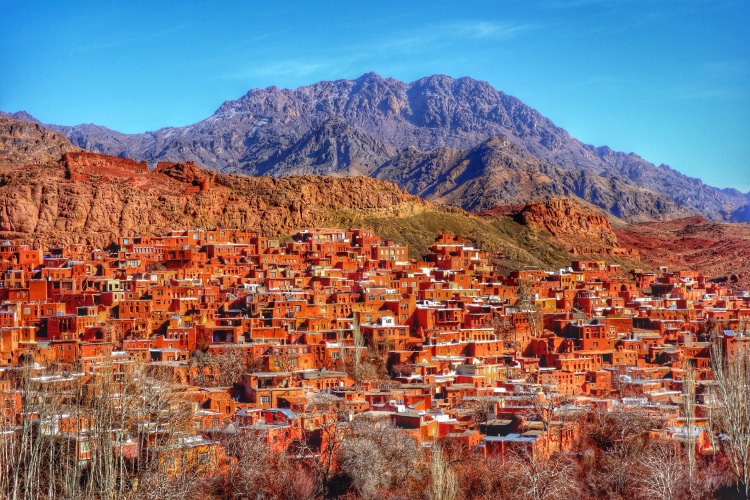 Forty kilometers far from Natanz, a city near to Isfahan, you will enter a village which its red stair house will attract your attention. The red view of these houses is because of the red soil that is utilized in their construction. It is a beautiful village in which people are still living the way they used to live 2500 years ago. It seems as if this part of world has been in a deep sleep and has never felt the passage of time. They have their own way of living.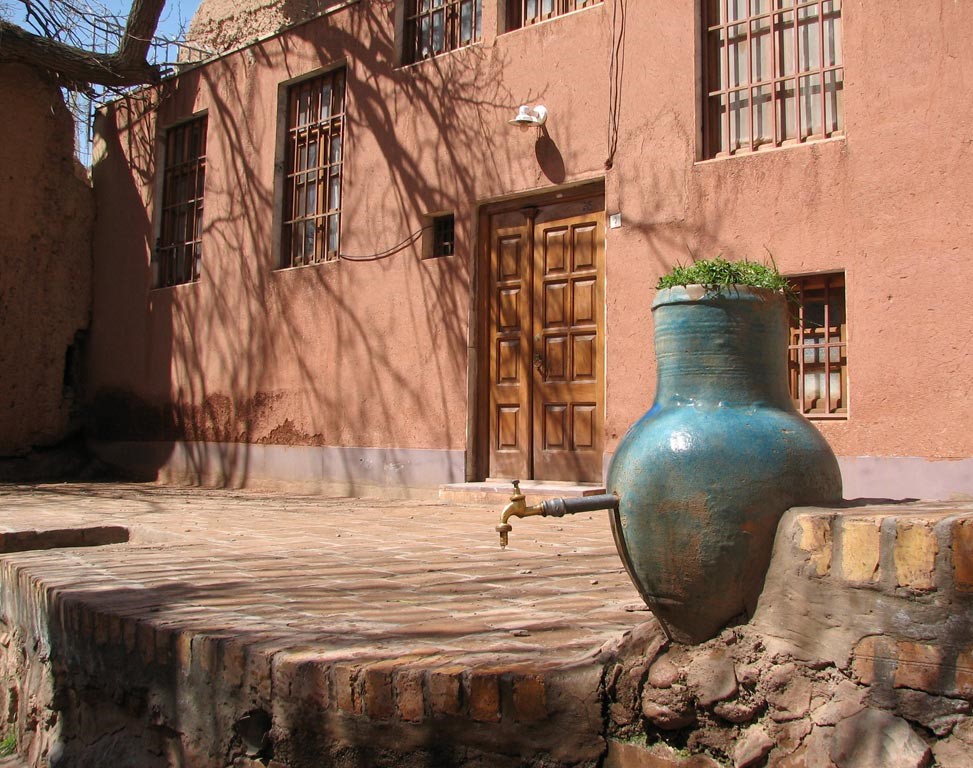
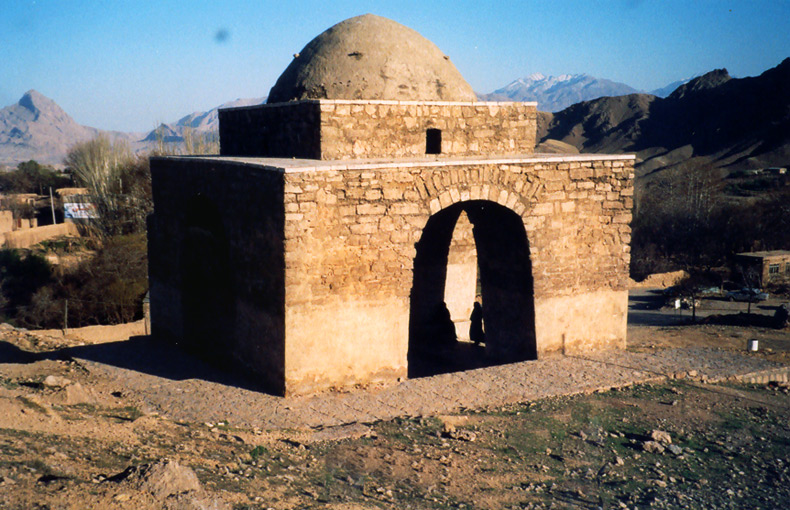 The Niasar Fire Temple (called Chahar Tagh) is a structure with a dome over a rock at the highest point of Niasar village, located 28 kilometers west of Kashan. The Fire Temple can be seen from quite a distance and has remained relatively intact since the time of Sassanid
 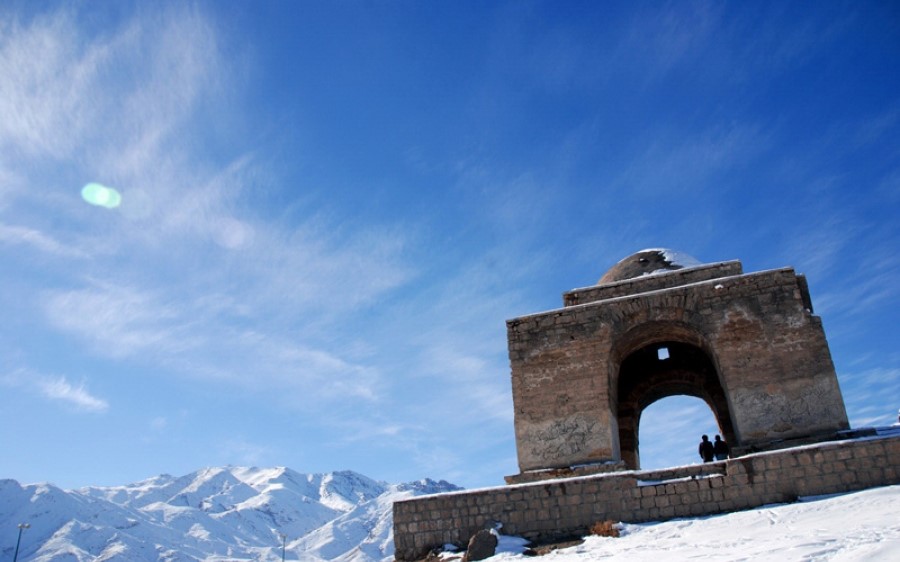 The main dome of the fire temple had previously collapsed. During the Shah’s era, the dome was reconstructed. However, the dome of the temple has been modeled on Islamic era
 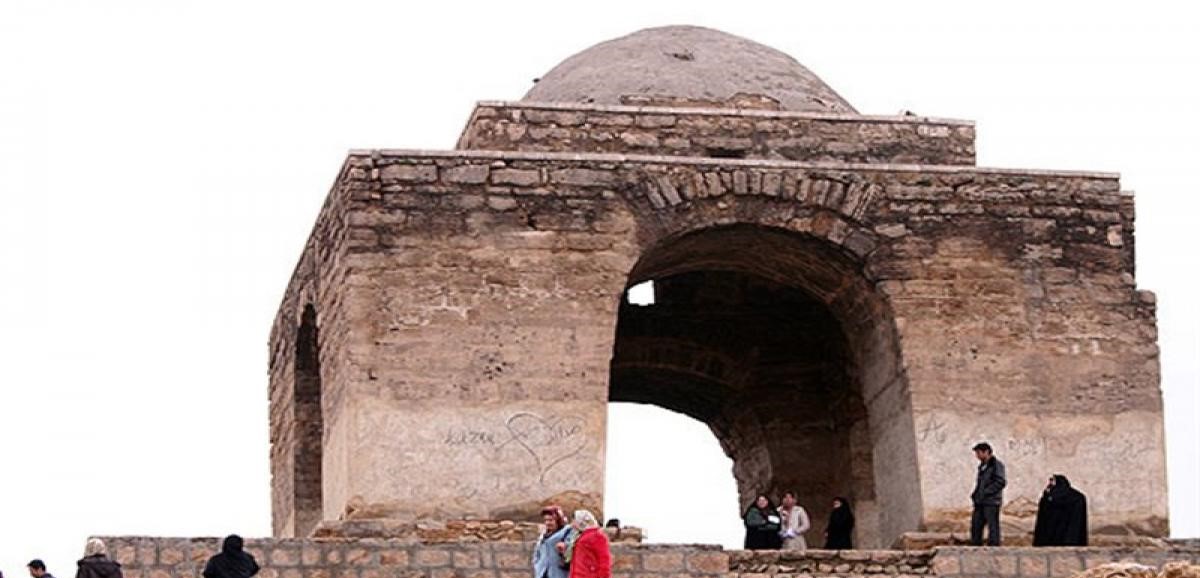 Generally there would be a number of other premises around fire temples where Zoroastrian monks gathered together for worship. Although it is not known whether this building was used for this purpose, there are rows of stones laid together near the fire temple which are remnants of a building belonging to the Sassanid era. Since the fire over the Niasar penthouse could be seen from distance, the building might have had a symbolic role.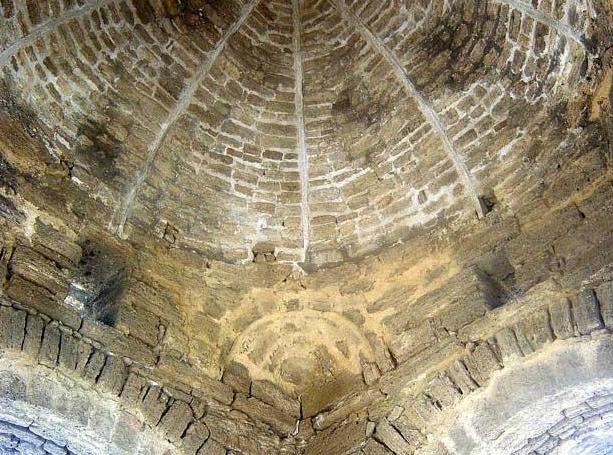
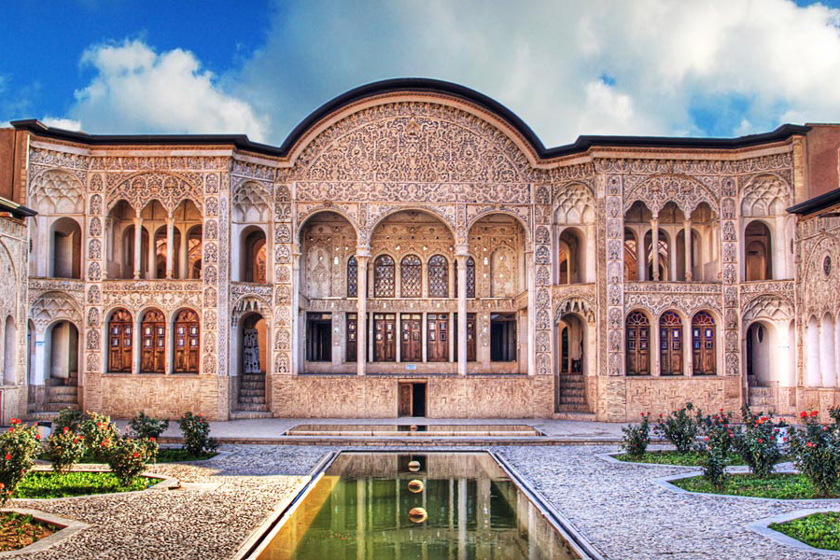 The Borujerdi House is a historic house in Kashan, Iran.The house was built in 1857 by architect Ustad Ali Maryam, for the wife of Seyyed Mehdi Borujerdi, a wealthy merchant. The wife came from the affluent Tabatabaei family, which Seyyed Mehdi fall in love with her and built this house for her.
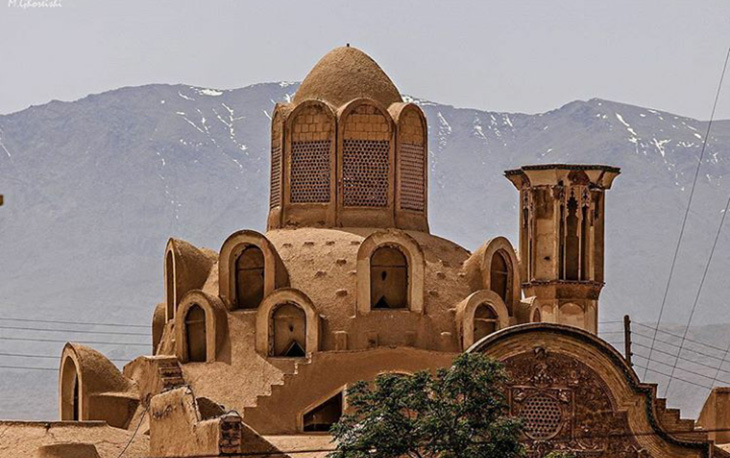 It consists of a rectangular beautiful courtyard, delightful wall paintings by the royal painter Sani ol molk, and three 40 meter tall wind towers which help cool the house to unusually cool temperatures.
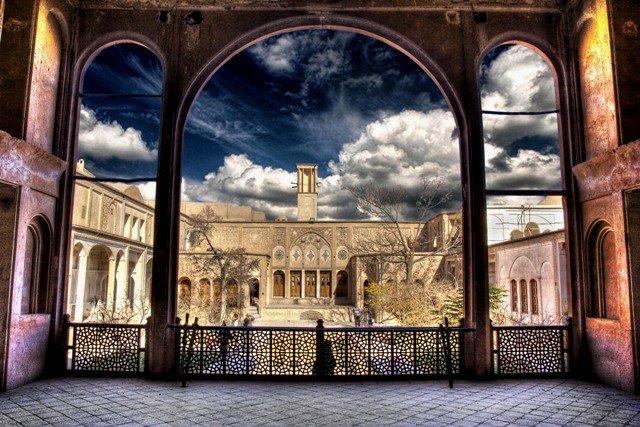 It has 3 entrances, and all the classic signatures of traditional Persian residential architecture, such as a biruni yard (exterior yard) and a daruni yard (andarun) (interior yard). The house took eighteen years to build using 150 craftsmen.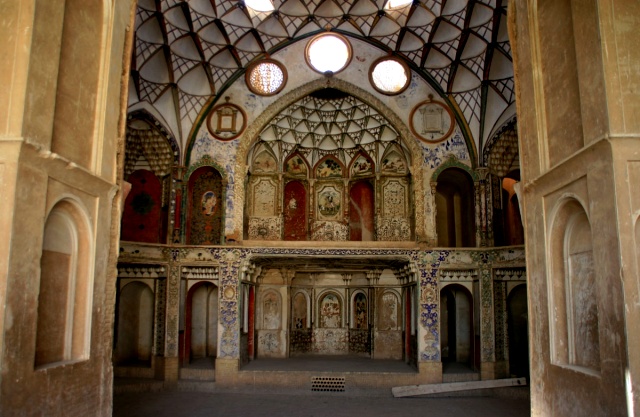
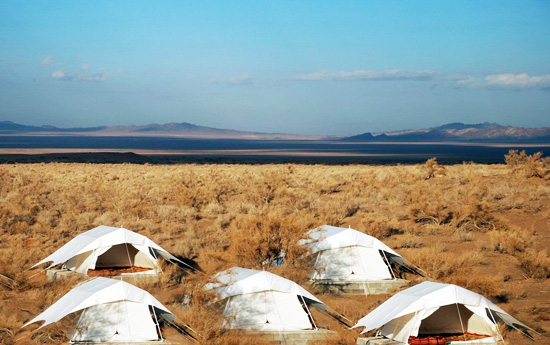 Matin Abad Desert Camp is one of the best eco-tourism for desert lovers that is located 45 Km south-east of Kashan. You can experience adventures in the heart of desert.The mail building House material is bricks and its like Iranian traditional house that combination with modern facility ,and also you can choose tends as your accommodation style that are designed based on traditional Iranian nomad tents.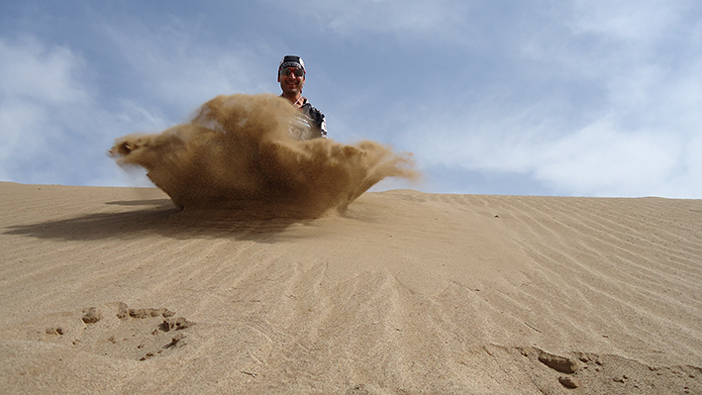
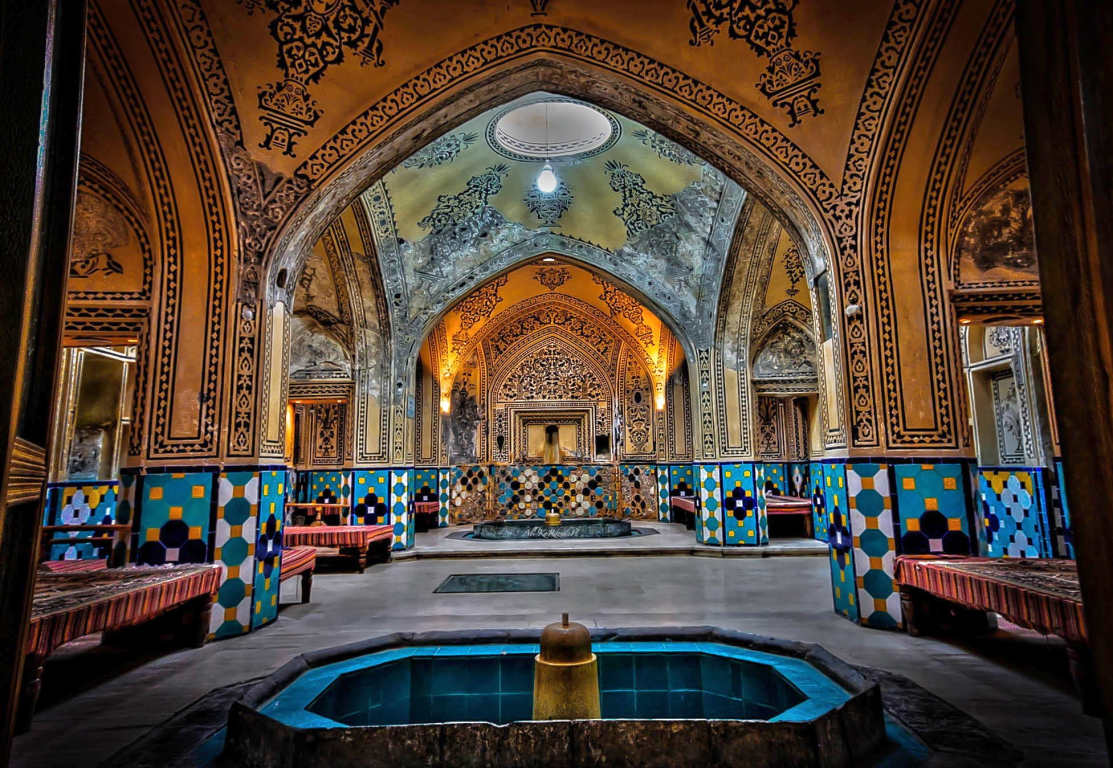 The Sultan
 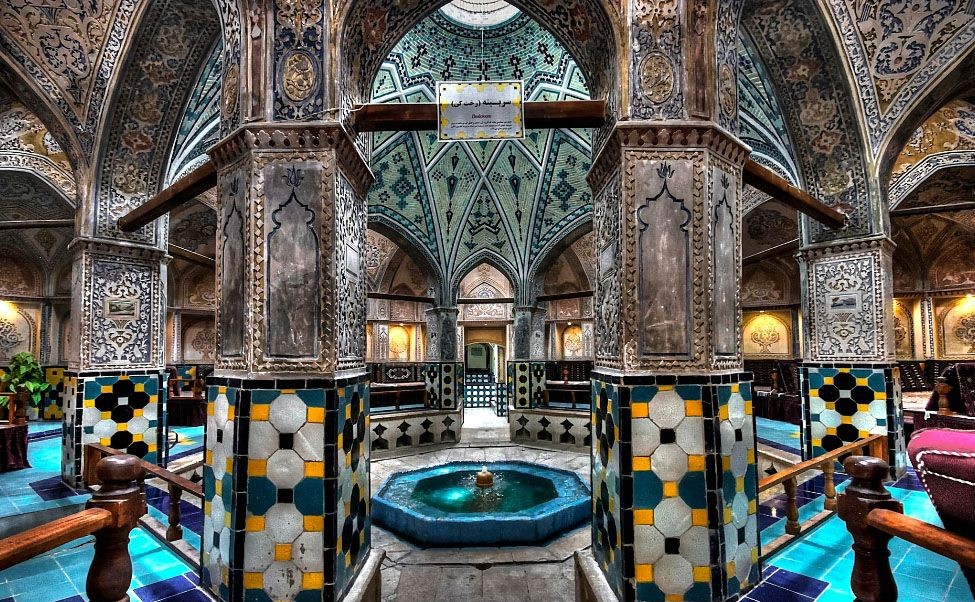 It was constructed in the 16th century during the Safavid era, however, the bathhouse was damaged in 1778 as a result of an
 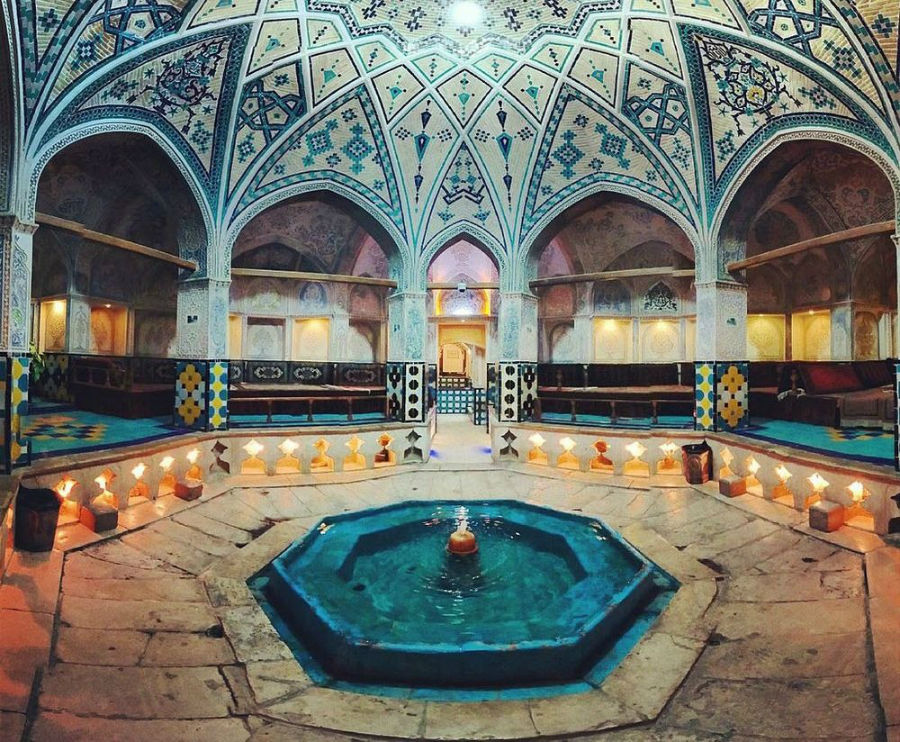 The Sultan Amir Ahmad Bathhouse has an area of approximately 1,000 square meters. It consists of two main parts, the dressing hall (Sarbineh) and the hot bathing hall (Garmkhaneh). Sarbineh is past the main entrance. It is in the shape of a large octagonal hall, which has an octagonal pool in the middle, surrounded by 8 pillars separating its outer sitting area. At the time of construction of the Bathhouse, its intended use was not just to serve cleanliness purposes but rather was a place for rest, gatherings, discussions and even prayers.
 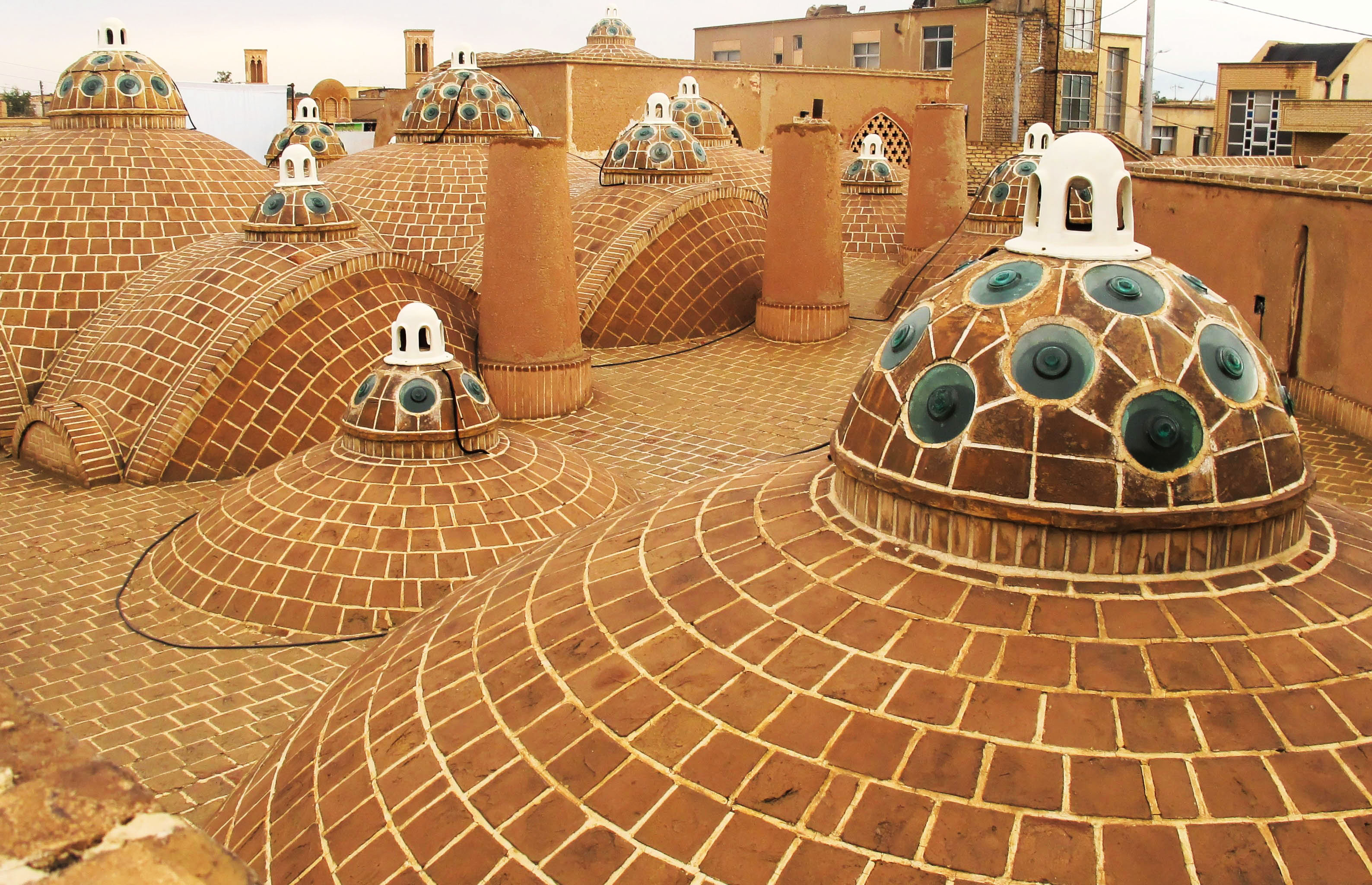 As a result there are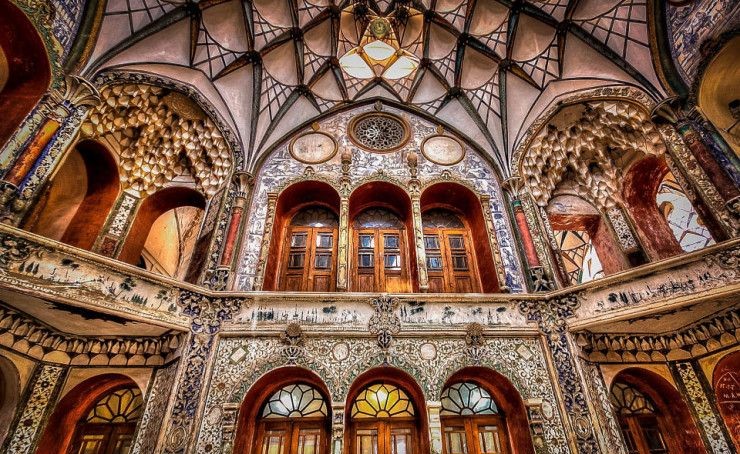
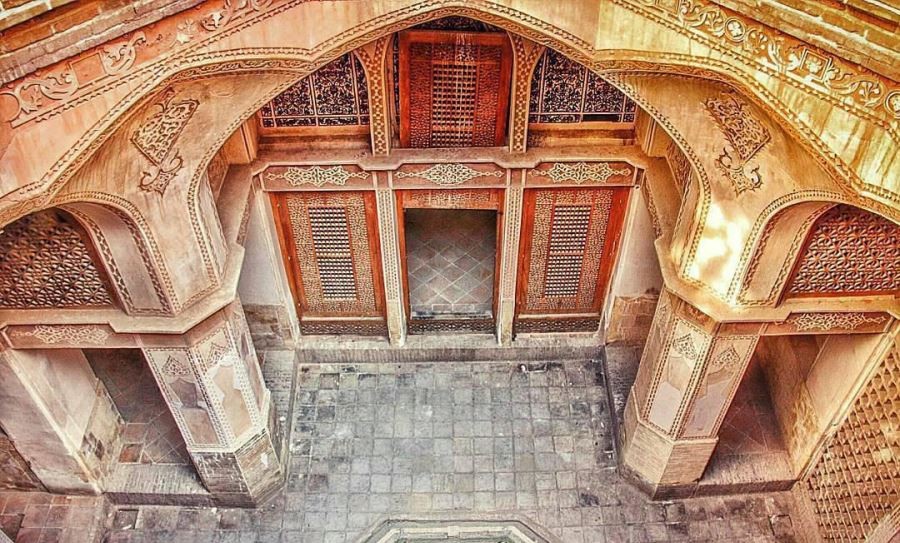 One of the largest and grandest of the old Kashani houses you can visit is the Abbasian Historical House.One of the elegant domed ceilings with angled skylights to provide illumination without allowing direct sunlight to overheat the room.Traditional houses in Iran have two door knockers which make different sounds. Men use one and women the other.
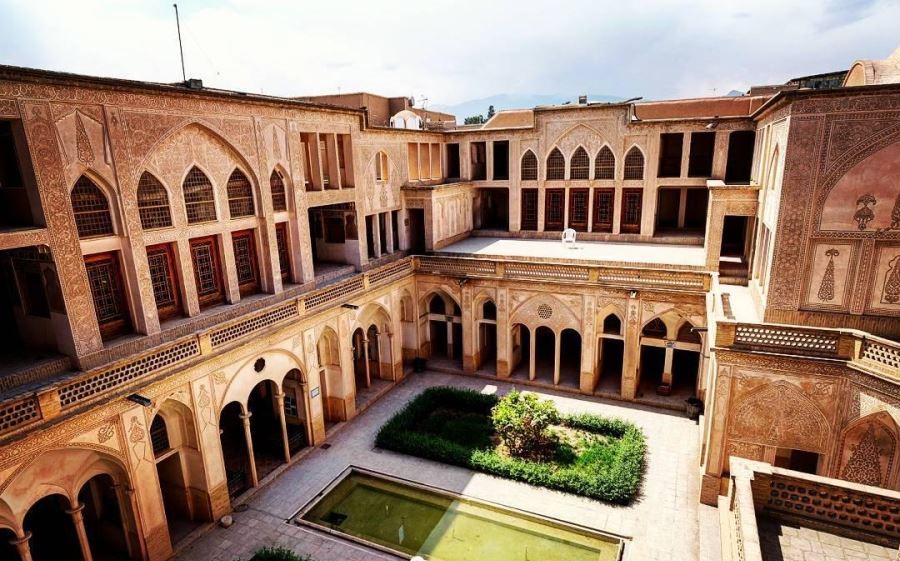 In a religious society, it's important to know who's at the door.The Abbasian Historical House in Kashan has four courtyards. This is a view of the upper level of the outer courtyard (for customers and guests). Note the domed skylight and the intricate carved plasterwork.
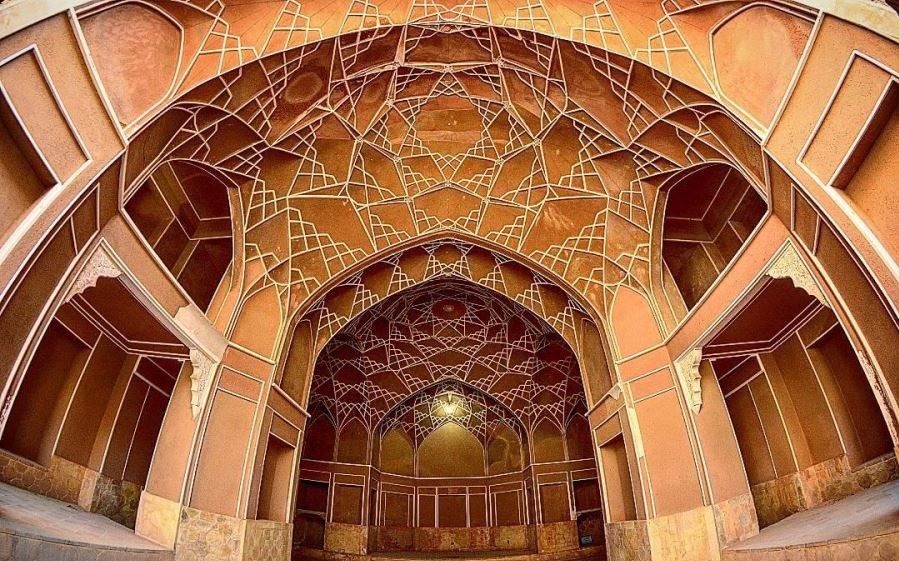 Another view of the outer courtyard. The grand domed porch would have been used for receiving the family's most important guests.The room with the elegant triple-doors you see on the upper level was reserved for the lady of the house. Three, five, or even seven-door chambers denoted the most important rooms of the house.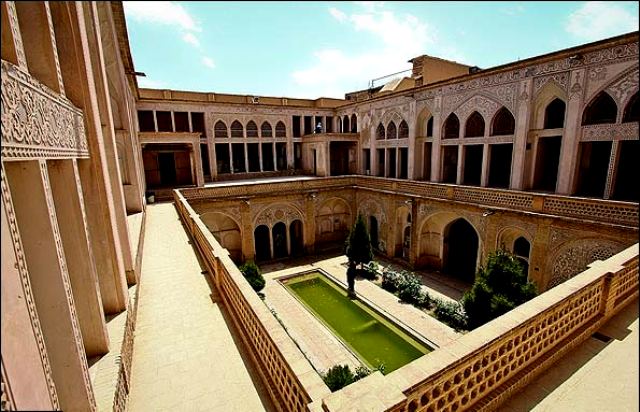
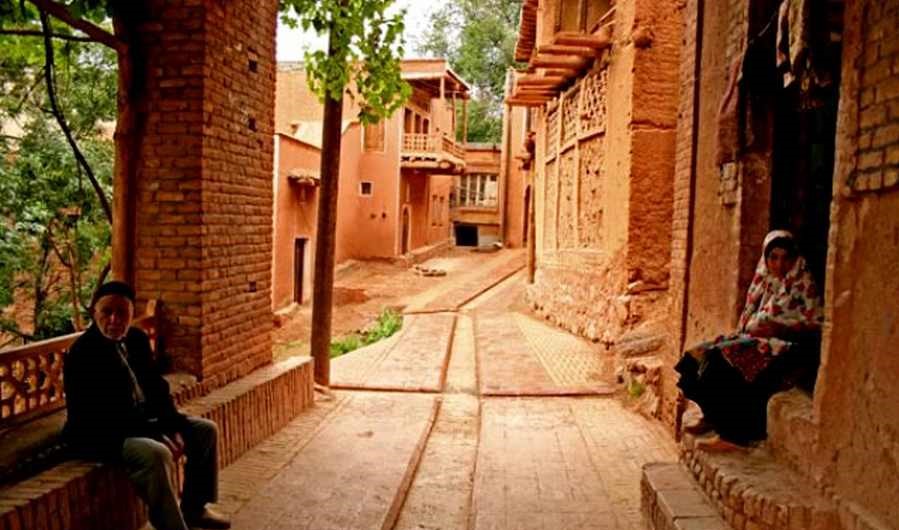
 Abyaneh is a beautiful historic village at the foot of Karkass mountain and at a distance of 28 km, 70 km to the southeast of Kashan and 40 km to Natanz. This is a village of living traditions, architectural styles (all in red clay), and probably the most interesting example of human adaptation to nature, wherein one can transcend the boundaries of time and space and experience the ancient civilization and culture of Iran. The village is compact, with narrow and sloped lanes, and houses located on the slope as if placed on a stairway. Here, the roofs of some houses are used to serve as the courtyard for other houses higher up on the slope. The language spoken by the literate people of Abyaneh is Parthian Pahlavi. They are deeply committed to honoring their traditions. No matter how well educated a person from Abyaneh might be, he or she puts on the traditional Abyaneh costume on coming back to the village from anywhere in Iran. The women's traditional costume consisting of a scarf with floral motifs and pleated pants, is particularly attractive. The Abyaneh woman is inseparably attached to her wedding gown inherited from her mother, and is expected to pass it on to her daughter. It bears such an intrinsic value of her that she wouldn't sell it at any price.


 Hi dear friends. I am NAVID TAHMASEBI (English instructor & Inbound manager of Tavrizh parvaz travel & tourism agency)and I was Born in Tabriz. This weblog is created to introduce IRAN for passengers from all around the World.