Tabriz as the tourism capital of Islamic countries in 2018
 Undoubtedly, Tourism is one of the most attractive and profitable industries of the world, contributing to the development and prosperity of the countries. The Eco-friendly essence of Tourism as well as its enormous revenue-making potentials has made all cities welcome it and strive to take the most advantages of this powerful industry by boasting their tourist capabilities and presenting all beautiful attractions of their regions to the world.
 In this regard, Tabriz has always starred in the sky of Iranian tourism throughput the history. Obviously, the selection of Tabriz as "the tourism capital of Islamic countries in 2018" by OIC (organization of Islamic cooperation) is a vivid reason to prove the claim.The Municipal administration of Tabriz Metropolis, as the leading power of city's dynamic progress, is to take all necessary strides to introduce the city to the world as a cosmopolitan city.May Tabriz 2018 be a starting point of a promising route , leading Tabriz and its citizens to their ideal goals and introducing the magnificent name of the city to all nations.
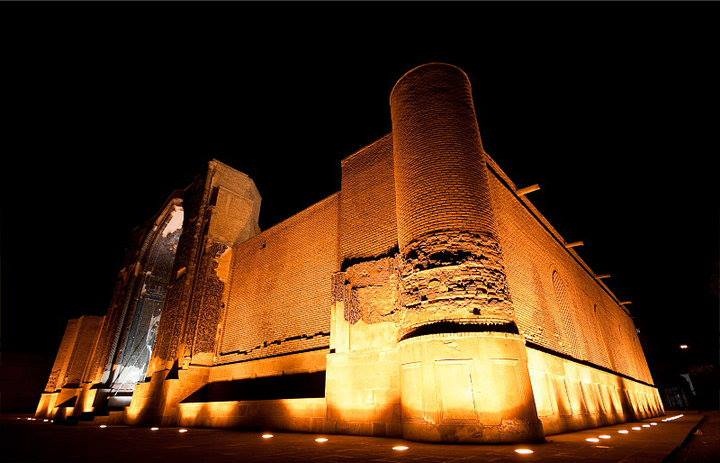
 Ark Citadel (Arg-e Ali Shah) is located in Imam Khomeini Ave, Tabriz, Iran. Arg-e Ali Shah is also renowned as Ali Shah Mosque (Ali Shah Citadel). Although today it is only partially extant, the Ali Shah Mosque is believed to have been the largest brick structure ever built.It was built in the IlKhanid period (1318-1339) by Ali Shah, the Iranian Minister. Within the construction, the roof of the mausoleum collapsed and the construction was stopped afterwards.
 Centuries later, during different wars (1804-1911), the compound was quickly reconstructed as a military compound. During the reconstruction of the Arg compound, a foundry factory for the manufacturing of cannons for the Iranian Army was built, as well as a military headquarter, a barrack for the troops, and a small palace was added as well to the original plan of the Arg.During the Pahlavi era, parts of the Ark which had been constructed in the 19th century by the Qajar dynasty, were destroyed. This destruction was with the aim of purifying the original Arg construction from later developments.
 In 1990s and 2000s a great Feast was built next to the Arg castle. The superstructure of the feast undermines the architecture of Arg castle. Despite the regulations of the Iranian Organization for Cultural Heritages and several courts hearing, the construction of the new structure continued and accomplished.Today, the only part of the massive walls and the southern sanctuary of the mosque have remained. These walls in fact can be considered as the main elements of Ali Shah's mosque.
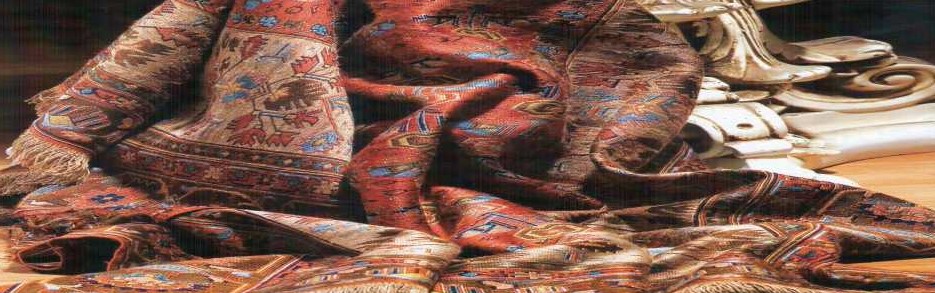
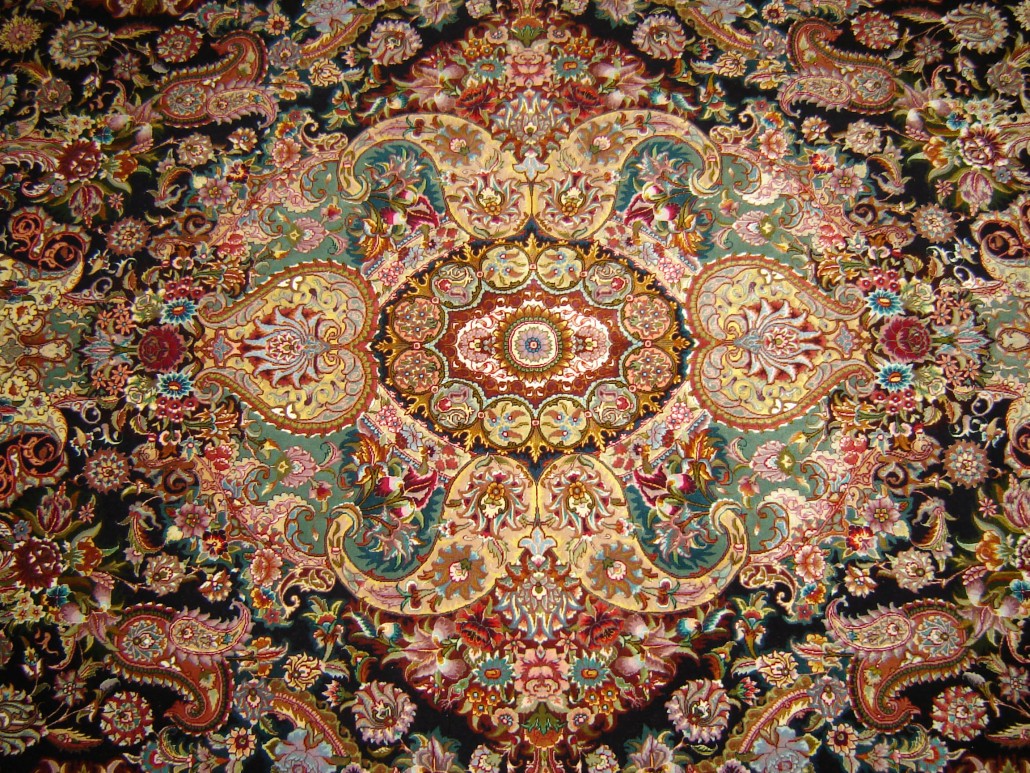 Tabriz, the centre of the most beautiful carpets and the best quality dried nuts of Iran, is situated in the northwest of the country.
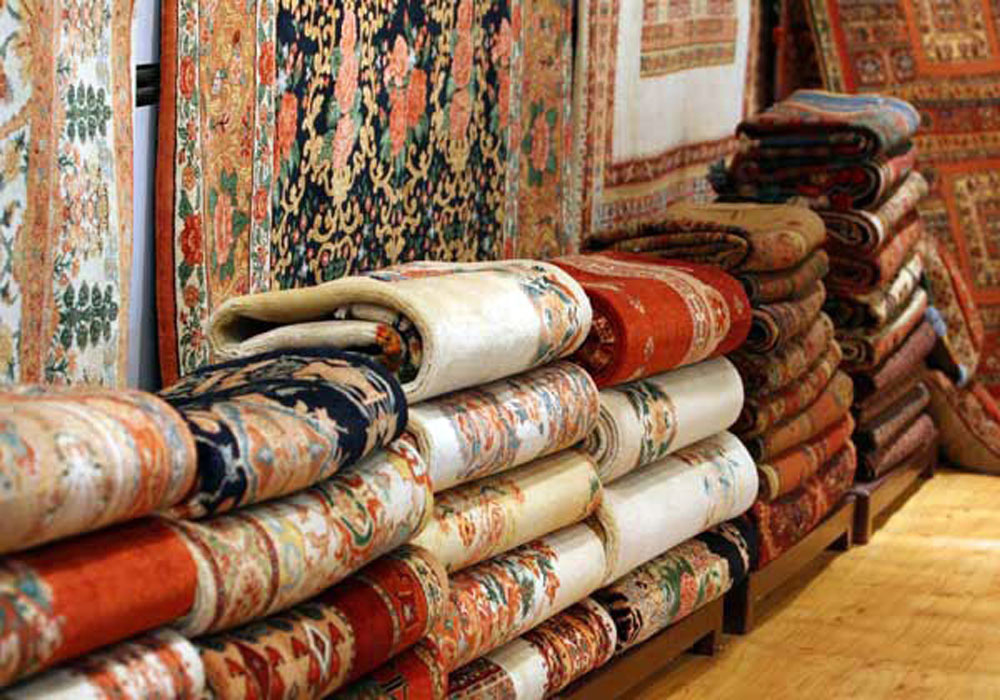 Antique Tabriz rugs are distinguished by their excellent weave and by their remarkable adherence to the classical traditions of antique Tabriz rug design. But they cannot be distinguished by any particular pattern or by their coloration.
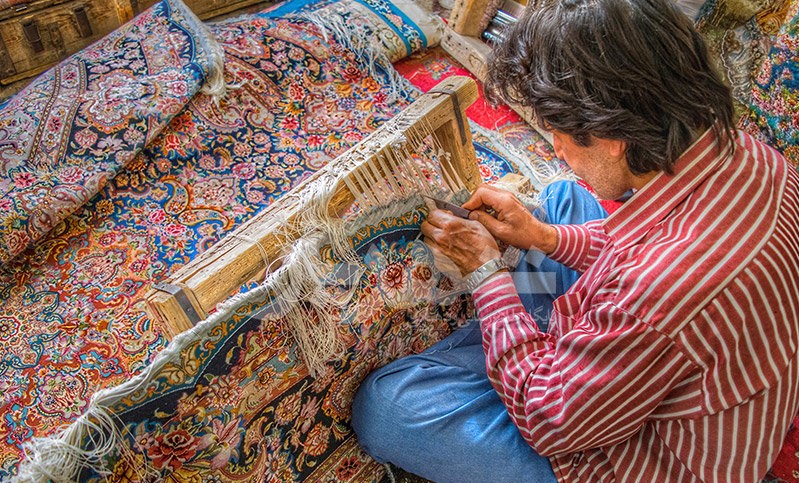 The city of Tabriz, in northwest Iran , was the earliest capital of the Safavid dynasty, and it can claim to have been a center of carpet production longer than any other city in Iran.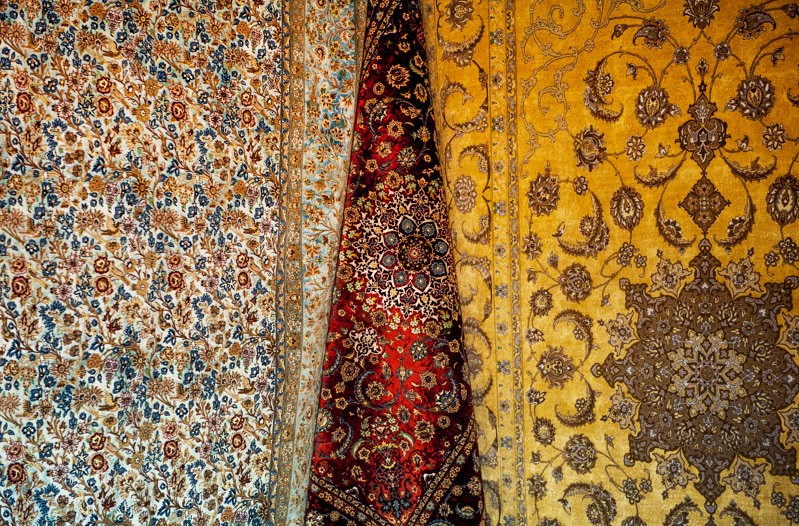
 Parvin Etesami House , daughter of Iran poetess, Home of Parvin Etesami was pertinenet the first Pahlavi period in Tabriz, Abbasi Street, next to the mosque Miraqa, lane Savojbolaghiha, No. 6 located and the effect on ESFAND 28, 1385(19-03-2007) with registration number 18681 has been registered as one of the Iranian nation.
 Parvin Etesami was born in March1906 in Tabriz, she studied at an American Girls College in Iran. Reportedly, she started composing poetry when she was eight years old. She is considered the greatest Iranian poetess ever.
 Although she had a short life, she became famous after her works were published. She died in 1941 by typhus at the age of 35, and was buried in Qom, Iran. Parvin is considered the greatest Persian poetess of the Persian classical style. Loneliness and seclusion from social activities - the lot of almost all Iranian women in her day - added to the sad experiences of a sensitive and tender soul and made her the most sincere voice of cruelty of the rulers and wealthy landlords.
 She knew of the corruption of the leading authorities in the judiciary and in the clergy. Her work, about 210 poems, reflects the reality of life in her day and offers moral solutions.
 Jameh Mosque is one of the historical monuments of Tabriz. Its date of construction is not known.Since its foundation, it has been surrounded by a market. The most ancient part of this mosque is its vast roofed area. It has an arch and domes, based on octagonal brick pillars, covered with delicate and artistic plasterwork of the 5th century AH (after hegira).


 Sahand , is a massive, heavily eroded stratovolcano in East Azerbaijan Province, northwestern Iran. At 3,707 m (12,162 ft), it is the highest mountain in the province of East Azarbaijan.It is one of the highest mountains in Iranian Azerbaijan, in addition to being an important dormant volcano in the country. The Sahand mountains are directly south of Tabriz, the highest peak of which is Kamal at an elevation of 3,707 m.
 Approximately 17 peaks can be accounted for as being over 3,000 m. in height. Due to the presence of a variety of flora and fauna, the Sahand mountains are known as the bride of mountains in Iran.[citation needed]The absolute dating of Sahand rocks indicates that this volcano has been sporadically active from 12 million years ago up to almost 0.14 million years ago.
 Sahand is made chiefly of dacite and associated felsic rocks.Winter sportsSahand Ski Resort is on the northern foothills of the mountain and near the city of Tabriz. This complex, also known as the Sahand Skiing Stadium, has a 1200 meters length ski area and skiing and snowboarding is practiced in the resort. The snow statue competition, which runs once a year at mid-winter in the stadium is a famous and amusing event, which attracts spectators and competitors from all over the country.
 Tabriz has been a place of cultural exchange since antiquity and its historic bazaar complex is one of the most important commercial centres on the Silk Road. Tabriz Historic Bazaar Complex consists of a series of interconnected, covered, brick structures, buildings, and enclosed spaces for different functions. Tabriz and its Bazaar were already prosperous and famous in the 13th century, when the town, in the province of Eastern Azerbaijan, became the capital city of the Safavid kingdom.
  The city lost its status as capital in the 16th century, but remained important as a commercial hub until the end of the 18th century, with the expansion of Ottoman power. It is one of the most complete examples of the traditional commercial and cultural system of Iran.The nominated property contains all the elements that are necessary to convey its significance. The integrity of the 18th century Tabriz Bazaar is well preserved and its architecture conserves a rich repertoire of commercial buildings; the connection between the physical structure and its functioning is still clearly legible, and in many cases alive.
 The rich historical sources bear credible witness to the importance of the Tabriz Bazaar over history and to the permanence of its layout. The fabric of the Bazaar still exhibits the design, workmanship, and materials of the period when it was constructed after the 1780 earthquake. The Bazaar is still a lively and economically active place, attesting to its rich and long-lasting economic, social, and cultural exchanges.
 Do not miss El Goli Park in Tabriz (former Shah Goli) as it's the grand "People's Lake" and a pleasant hillside garden and park around a 5 Ha water body.El Goli is only 4 km downstream of Tabriz to the south, so it's a popular weekend destination for locals to relax for breakfast or afternoon activities.
  Especially popular is the hill on the eastern side of the park with some steps leading down to a pool and a fountain flowing from the hilltop. The square lake is said to be 12m deep surounding a grand hexagonal palace building.Early history is not clear however it's most widely beleived the original purpose of Shah-Goli Lake was a water resource for agricultural purposes. The pool itself is said to have been built during the reign of Aq Qoyunlu kings.
 However it was extended by the Safavids, before being used as a summer palace during the Qajar dynasty when the prince of Iran officially resided in Tabriz. Afterwards the lake was reconstructed during the reign of Mohammad Reza Pahlavi (Last Shah). Though after the Iranian Revolution of 1979, removing the Shah's name from all urban planning became a sort of norm. So the name of Shah-Goli was changed to El-Goli Park in Tabriz in official documents, yet remains commonly called Shah-Goli by locals.

 Maghbaratoshoara is a mausoleum for poets, mystics, scientists and well-known people of Tabriz located in the sorkhab district of Tabriz. It is located in Sheshghelan suburb, Seghatoleslam Ave in Tabriz on the east side of Seyed Hamzeh's grave and Ghaem Magham's grave. In the past it has also gone by the names of Haziratoshoara, Haziratolghozat and Sorkhab Cemetery.
 The exact date of its creation is not known. The Mausoleum was first mentioned by Hamdollah Mostowfi in his Nozhat ol-Gholoub. Hamdollah mentions it being located in what, at the time, was the Sorkhab district of Tabriz, Sorkhab and Charandab being the oldest districts in the city of Tabriz.The cemetery had been functional and in good condition up until the attack of the Ottoman Empire at the end of the 10th century, but following their attack and for the next few years it was desecrated and destroyed.
 While natural dictators such as earthquakes (in particular the ones in 1193 and 1194) and flooding has caused massive damage to the cemetery as well, however, its deep roots in Tabriz’s history and culture has prompted construction of new monuments on the property in order to preserve it. Since the 1970's, there have been attempts to renovate the graveyard area. In 1971, assisted by a newspaper competition to come up with a design, the entry of Engineer Farzanmehr was selected and the construction of a new symbolic building on this site was undertaken.
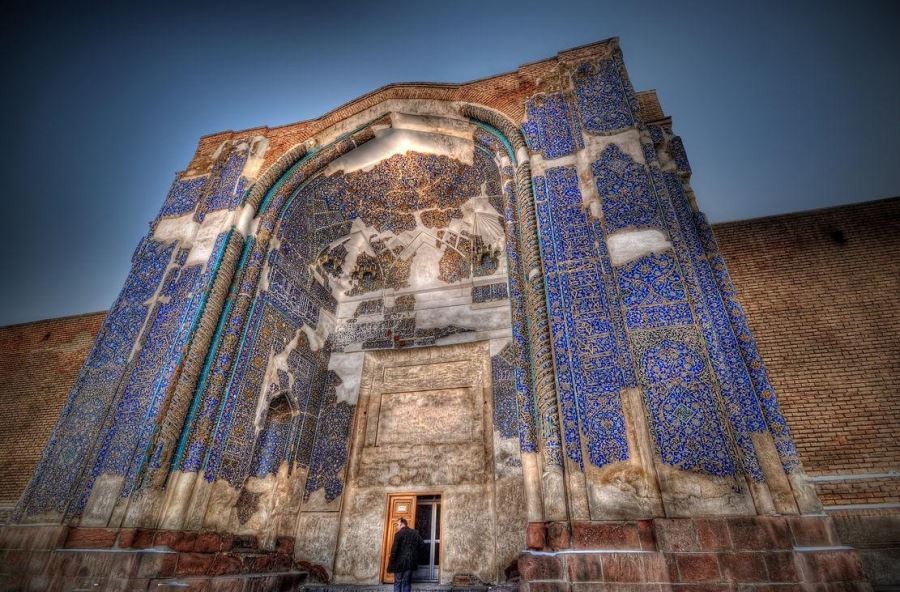 Blue mosque, also known as Kabood or Goy mosque, is a famouse heritage site in Tabriz, Iran. The mosque and some other public buildings were constructed upon the order of Jahan Shah, the ruler of Kara Koyunlu dynasty who chose Tabriz as the capital of his kingdom. There is a mausoleum in the southern section of the mosque where the builder, Jahan Shah, is buried.
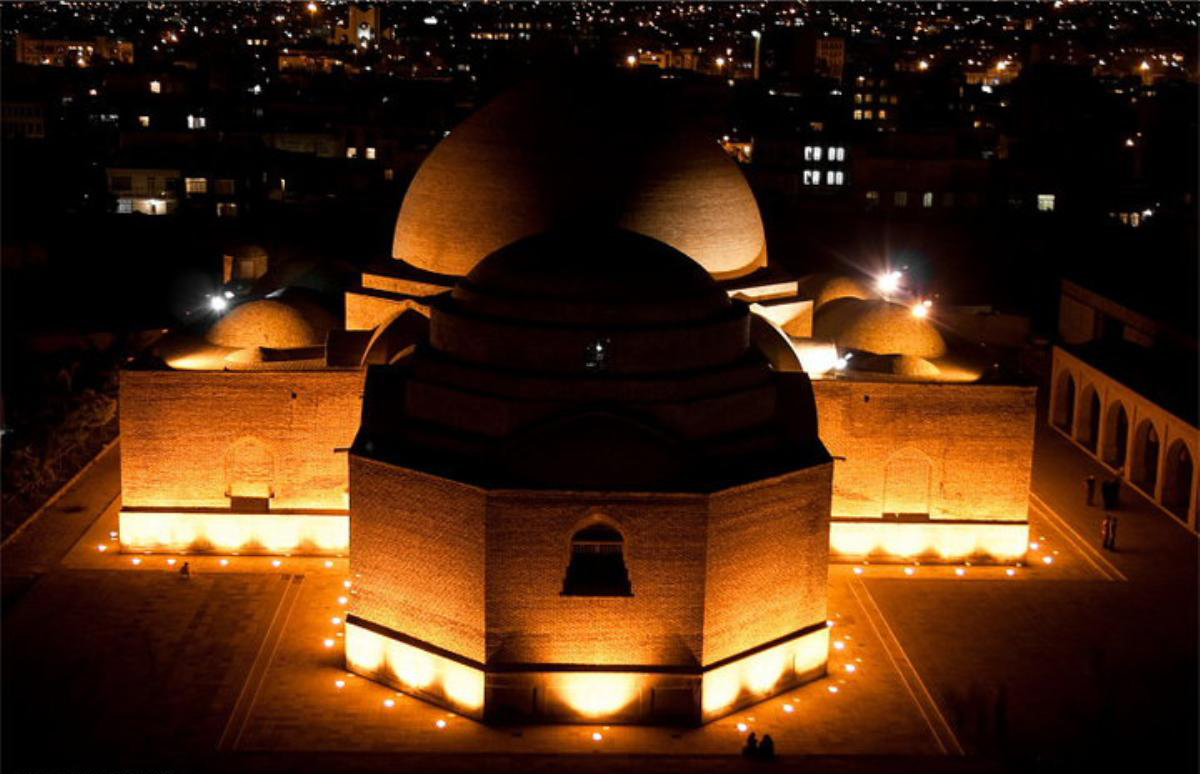 Originally built in 1465, the mosque was among the most glorious buildings of its era. Once built, artists took a further 25 years to cover every surface with dark and bright blue tiles and intricate calligraphy. This precious work of Islamic period is known as “the turquoise of Islam” since it was decorated in turquoise-colored tiles for which it is nicknamed. Decoratively, it can be compared with Timurid works in Herat, Samarqand and Khorasan, and in terms of architecture it is comparable with Ottoman buildings especially with great mosques of Orhan and Yeshil in Bursa.
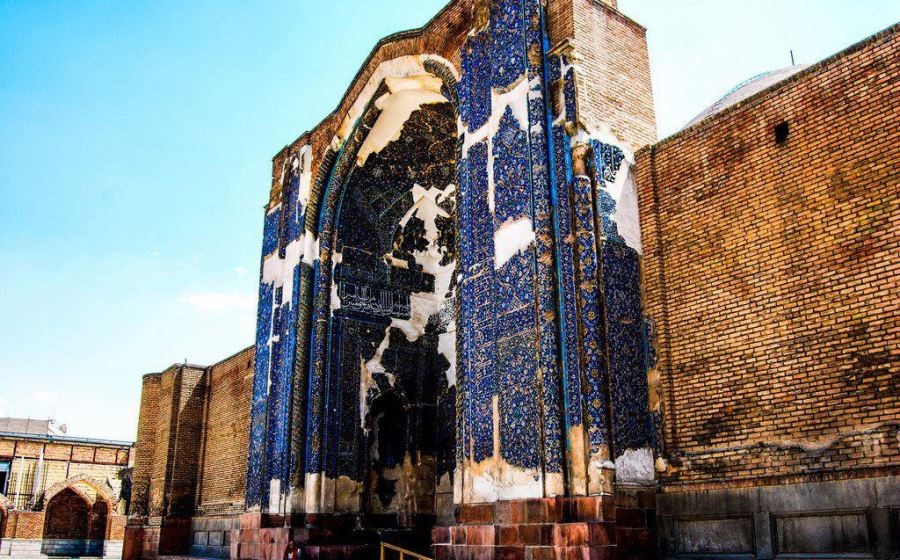 There are at least 3 “Blue Mosques” in the world: Tabriz, Istanbul, and Yervan. There is another one in Afganestan too, but it is not so famous.The most outstanding features of the Blue Mosque in Tabriz include its especial blue tiles in northern façade, its large dome that spans a large area of about 30 meters by 30 meters and its double-layered roof made of bricks and some special limestone. Geographically located in a cold cimate, the mosque has no quadrangle.
  The diverse Kufic and Thulth scripts, the exquisite arabesque patterns, and the admirable chromatic of these facades, which are truly stupendous, were created by Nematollah-ebn-e Mohammad-ol-bavab, the famous calligrapher. The walls (inside and outside) had been covered with mosaic tiles.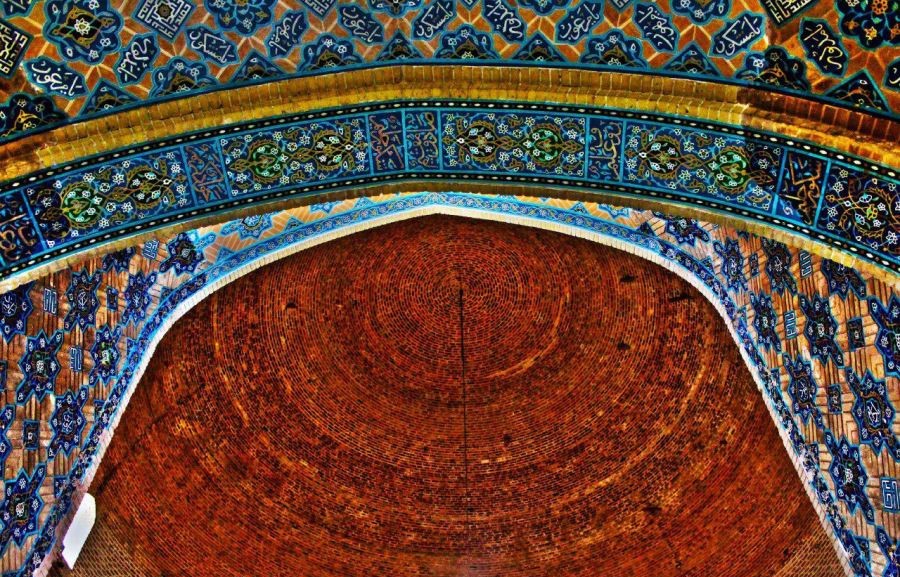

 The museum of classic cars in Tabriz has been established by mr. Khalil Ghafari Shahrak in 1391. This museum contains old models of Ford, Benz, Chevrelet, Biok, Volkswagen, Dodge, which is one of the best characteristic of this beautiful museum. The owner has collected all pieces with love and enthusiasm. Tabriz known as the City of Pioneers,enjoys the previlige to have the first private classic car museum. These cars belonged to the important people and many of them have a valid genealogical tree . Another remarkable points about the museum is the brand new 1372 peykan, with temporary transit permit. This museum is located in Tabriz-Tahran road beside Vahid Coffee Shop.
 Azerbaijan Museum is the major archaeological and historical museum in Tabriz, in the northwest part of Iran (East Azerbaijan province). It was established on April 1958.[1] The museum consists of three major halls, a side yard, office rooms and a library.
 It mostly contains objects discovered from excavations in Iranian Azerbaijan, also some artworks and sculptures of artists. Its library contains more than 2500 books, both handwritten and printed, about history, archaeology, art and Iranian culture.[2] Apart from National Museum of Iran in Tehran, Azerbaijan Museum has the largest collection belonging to different periods of Iran's history.
 Sharbat Oghli House:This home with its different special architecture located in Sorkhab square of Tabriz. This house was built before Mashrooteh time, belonging to a family called “Company”. Then another famous Tabriz families called “Sharbat Oghli” got that.It is being told that in Asura mourning days, they used to fill in the stone pool of yard in the house full of drinks and spread it among mourners. After this time, mentioned family is known as “Sharbat Oghli”.This house belonged to Tabriz municipality in 1370 and changed to the first cultural center of Tabriz and until now there have been hundreds of fairs.
 The Blue Mosque (or Masjid-e Kabud) on the north side of Imam Khomeini Avenue, is a 15th-century structure destroyed by one of Tabriz's recurrent earthquakes Despite showing a sorry ruin, it was recently restored with the utmost skill. Because of the blue tiles used in the decoration of both interior and exterior of the mosque, it has become to be known as the Turquoise of Islam.


 Hi dear friends. I am NAVID TAHMASEBI (English instructor & Inbound manager of Tavrizh parvaz travel & tourism agency)and I was Born in Tabriz. This weblog is created to introduce IRAN for passengers from all around the World.