Ali Qapu_Isfahan
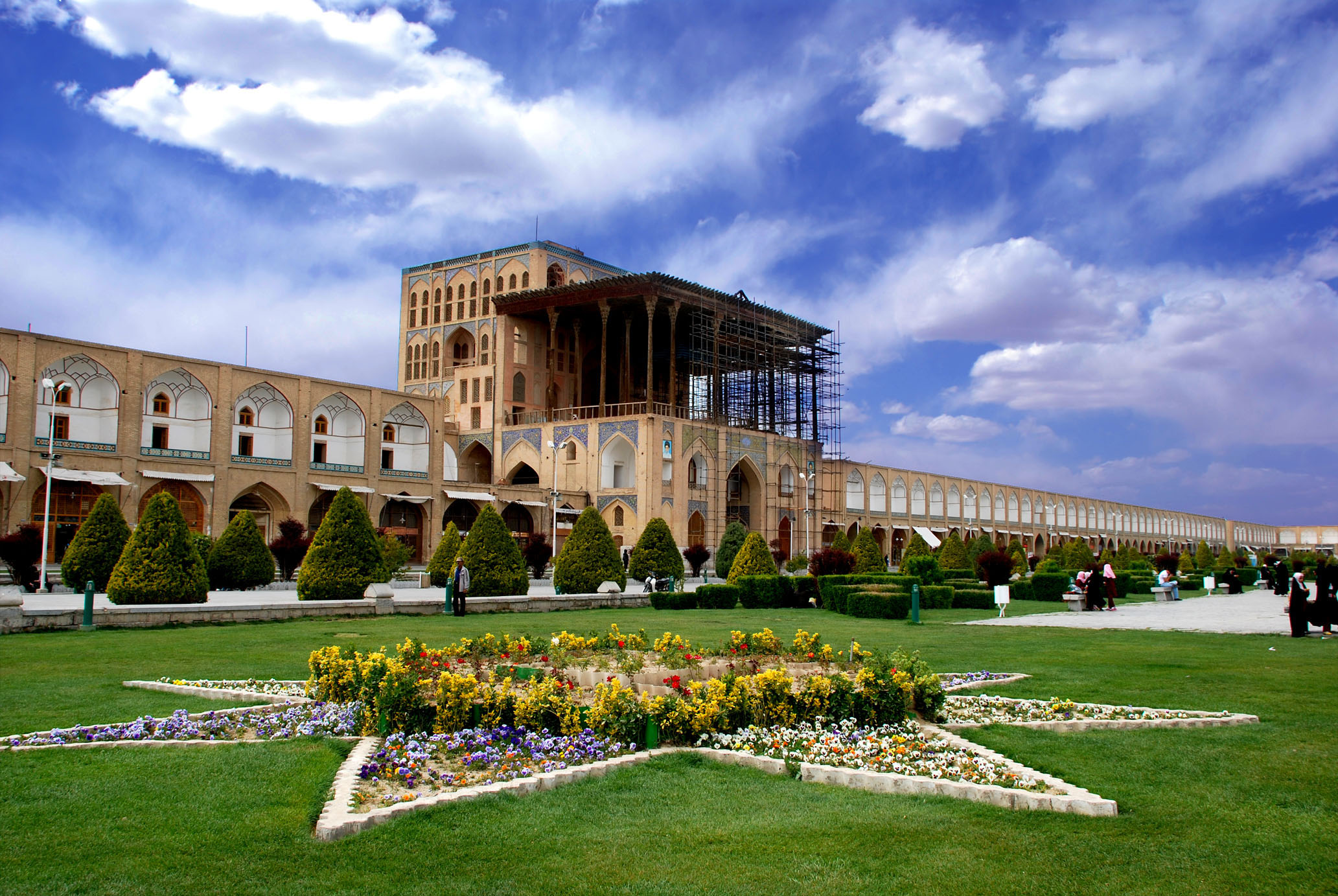 Ali Qapu palace which is a unique example of palace architecture in the Safavid era was constructed under the order of Shah Abbas I in the early 11th century A.H. The monarch received special envoys in this palace and held his audience here. There are five floors in this palace and each floor has its special decorations.
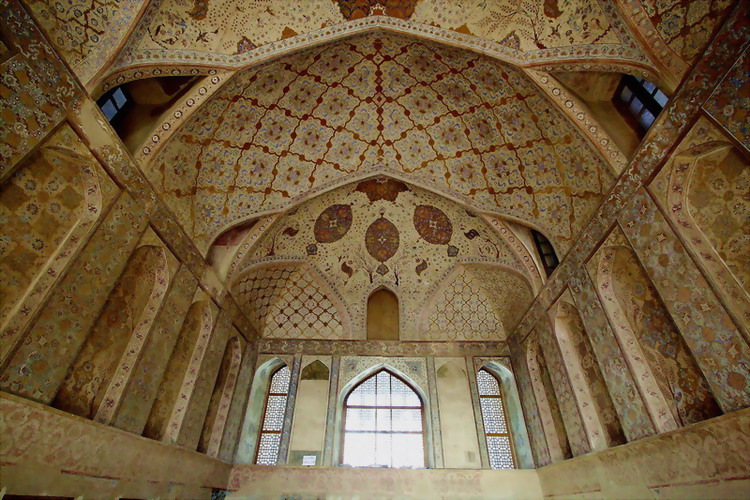 During the reign of Shah Abbas II, a royal parlor (Shah Neshin) was added to the main building and the sovereign and his guests watched polo, illuminations, fire-works and the dramatics that took place in the Nagsh-e-Jahan Square from the halls of this elegant palace. This palace was also called 'Daulat Khaneh-e-Mobarakeh Nagsh-e-Jahan' and the 'Daulat Khaneh Palace'. Its unique archaic architecture is related to the Safavid era.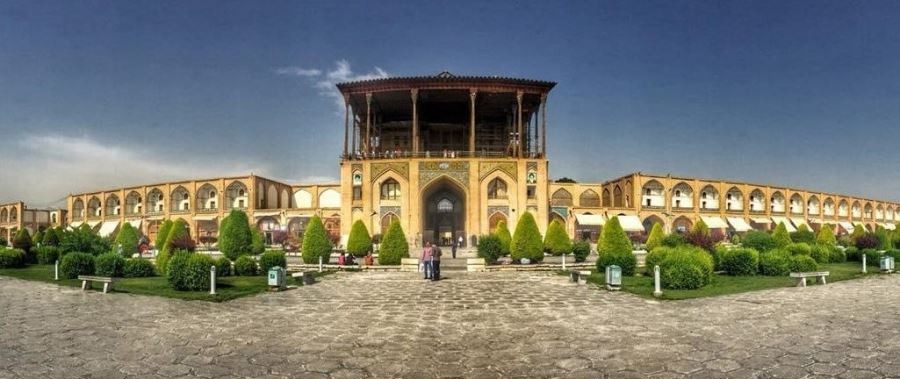
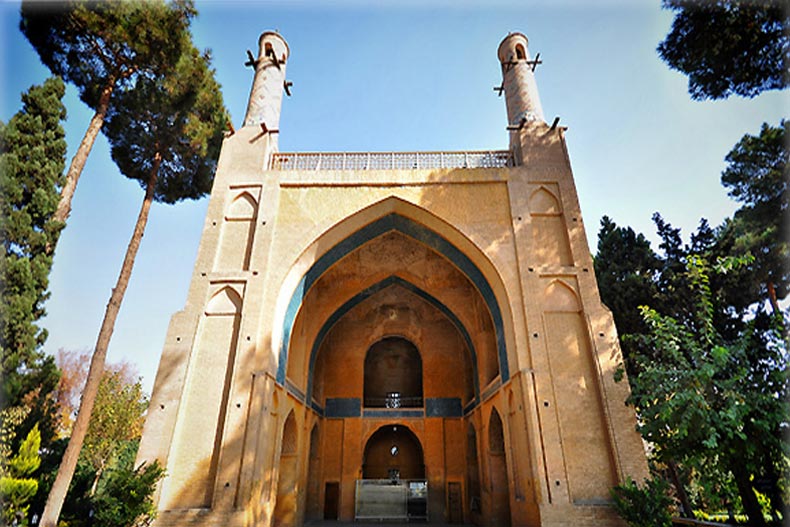
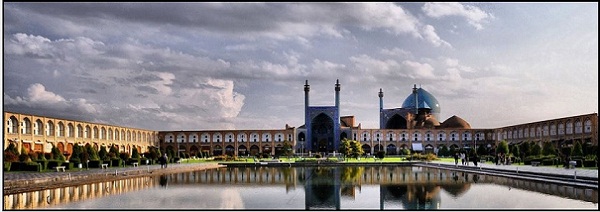 Naghsh-e Jahan Square is square in the heart of Isfahan that include A’li Qapu palaces, Sheikh Lotfollah , Imam Mosques and Bazaar.The square with 160 meters wide by 560 meters long in the center of the city that has been registered by UNESCO.
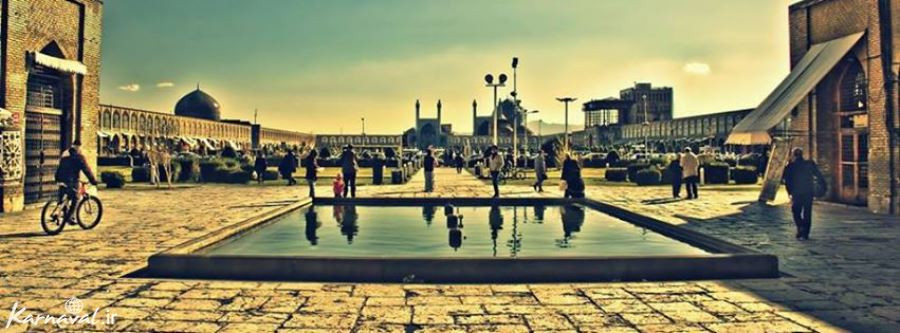 This unique building was built in the reign of Shah Abbas .In the past,there was the right place to play polo, military parade and ceremony.
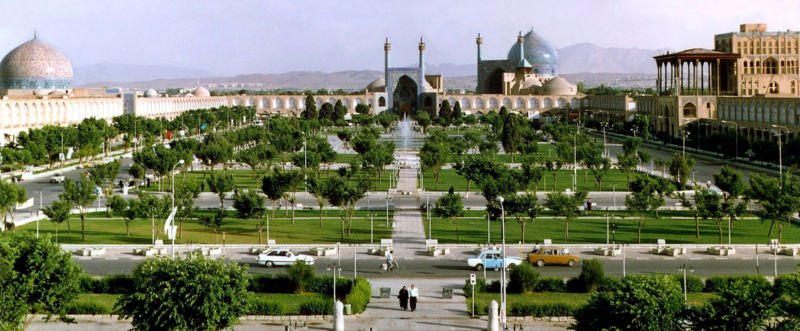 Unique architecture of this place will fascinate you,Although very simple and buildings and porches have a simple shape,But geographic location of making it very important to have the light during all day and create beautiful images.This is just one of the special features and unique architecture of this place.Many travelers admire this building.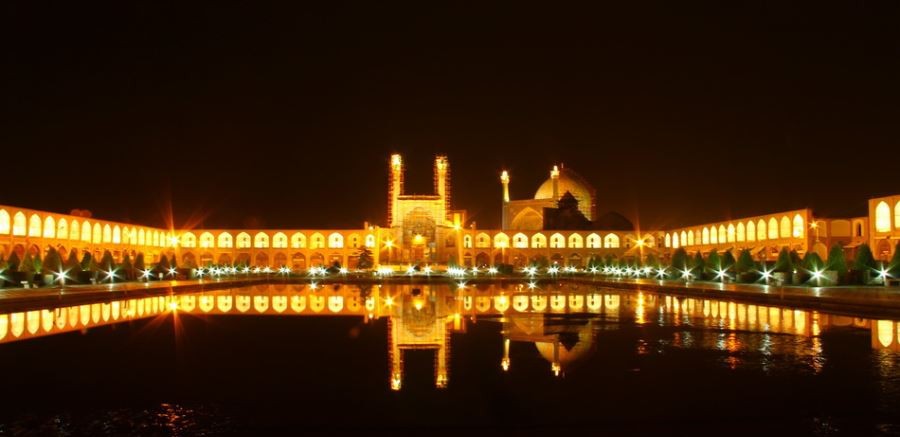
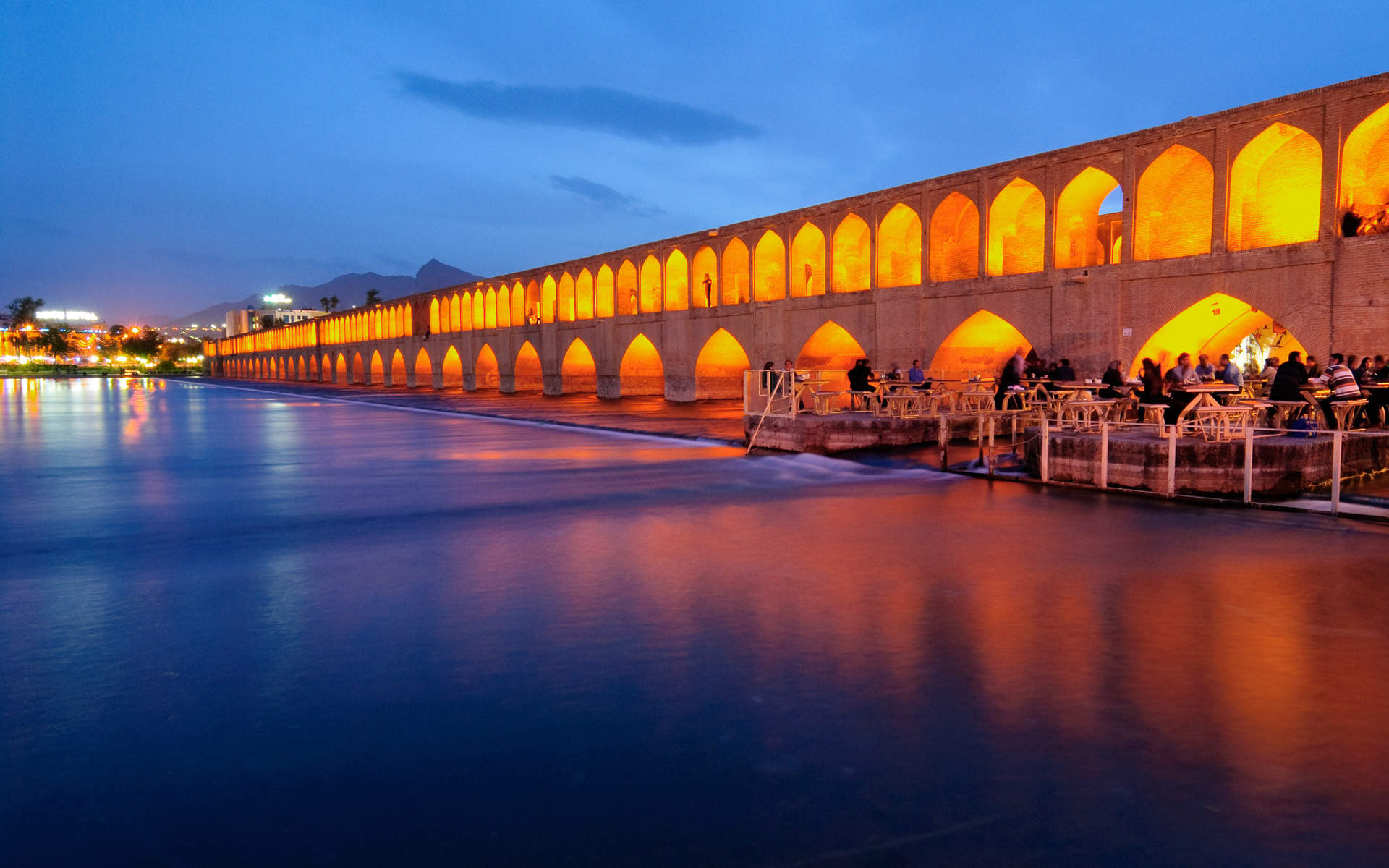 Si-o-se Pol Bridge is a stone double-deck arch bridge in Isfahan, Iran. It is also called Siose Bridge (which in Persian means “33 Bridge” or “Bridge of 33 Arches”) or Allah-Verdi Khan Bridge. Si-o-se Pol Bridge is built by the chancellor Allahverdi Khan Undiladze on commission from from Shah Abbas whose chancelor he was.
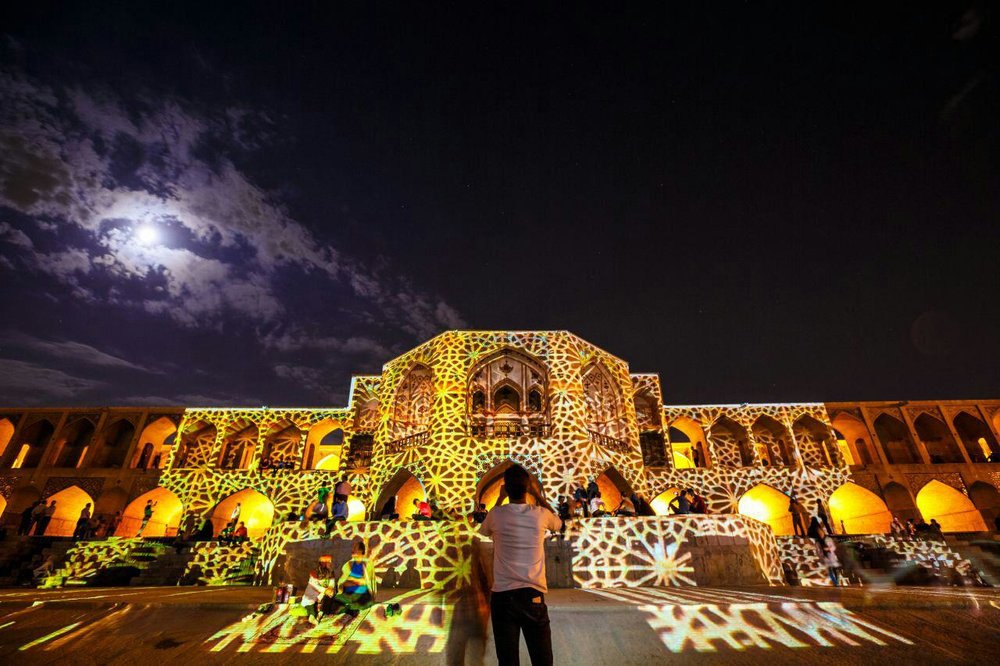 Construction of the bridge began in 1599 and ended 1602. Bridge is long 298 meters and wide 13.75 meters. It has 33 spans from which it gets its name with the longest span of 5.6 meters, crosses Zayandeh River and is located in the southern end of Chahar Bagh Avenue.
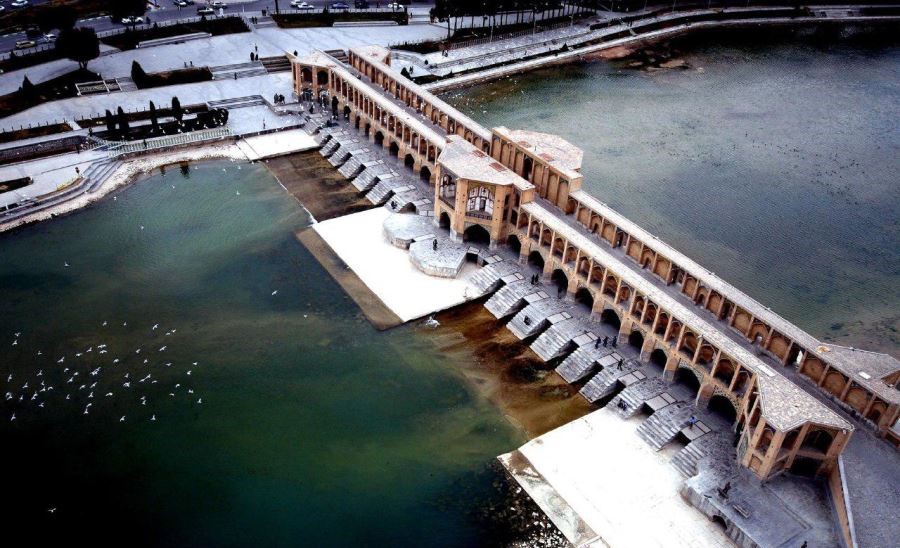 Bridge has a large plane at the beginning of the bridge where Zayandeh River flows faster. There it has more arches making with that a suitable place for a tea house that can be accessed from the southern bank. There are two levels of arches. Lower level has 33 arches while upper has two arches above lower lever arch and one arch above pier. Road that goes on the upper level is bounded by two high walls that protect travelers from winds and pedestrians that can walk there, from falling.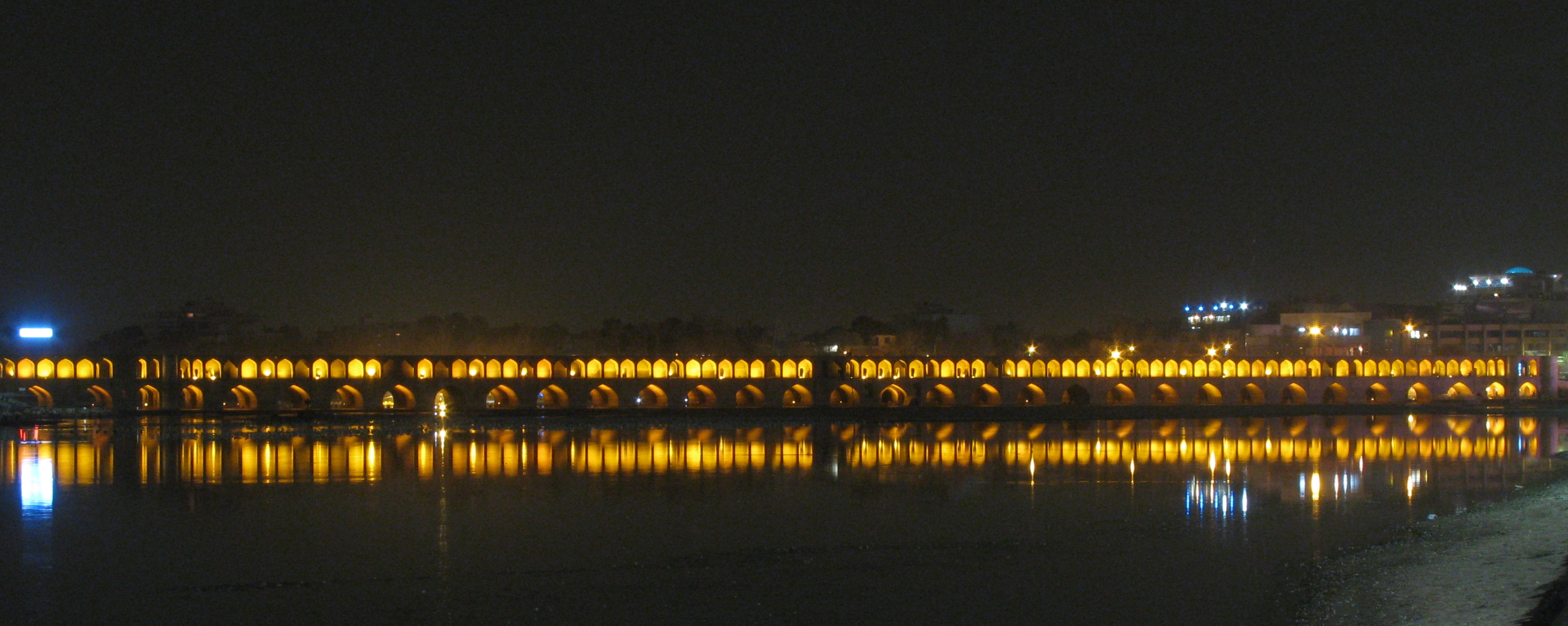


 Hi dear friends. I am NAVID TAHMASEBI (English instructor & Inbound manager of Tavrizh parvaz travel & tourism agency)and I was Born in Tabriz. This weblog is created to introduce IRAN for passengers from all around the World.