Dashkasan or the Dragon Temple_Zanjan
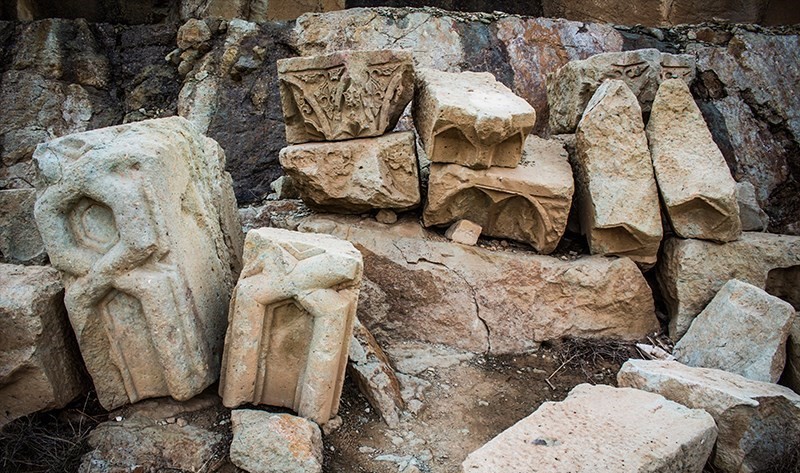
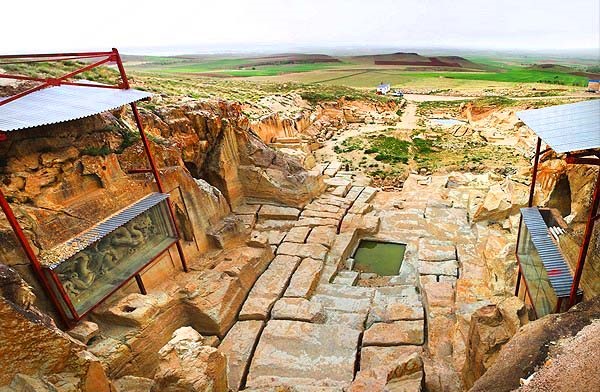 Dashkasan or the Dragon Temple is located 10 kilometers southeast of Soltaniyeh near Veir Village. Dashkasan consists of three deep, manmade caves that have exquisite stone carvings. One of these carvings is the image of two 3.5-meter dragons facing each other. There are alters decorated with floral and arabesque motifs as well as stone Muqarnas decorations on either side of these carvings.
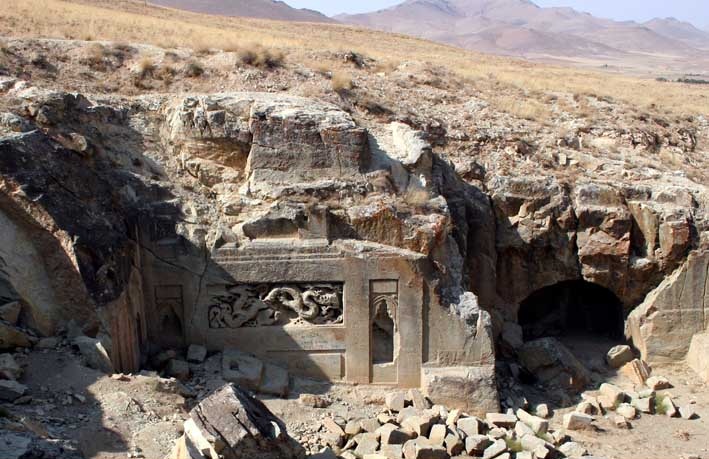 According to one theory, these carvings are the work of Chinese artists commissioned by Ilkhanid ruler Oljeitu (1280 – 1316). Other researchers believe this temple was initially used by the followers of Mithra in Sassanid (226-651 CE) Iran and was later used as a temple by the Ilkhanids before they converted to Islam.
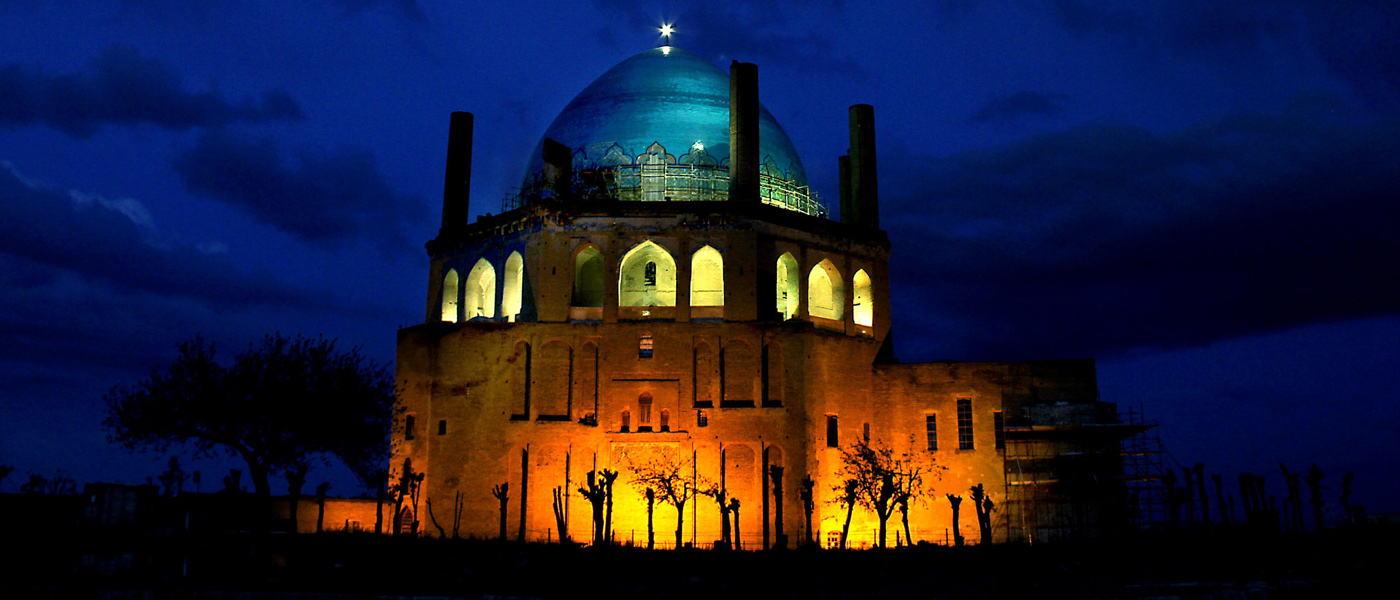 Soltanieh Dome has 8 elevated porticos and about 50 chambers, including an area which is also similar to a chamber. The dome of this construction weighs 200 tons and is situated on pillars, bearing an area of 50 sq.m. each if separated or cut across. This structure is made of a mixture of gypsum and to a lesser proportion limestone. Gonbad Soltanieh is erected in three floors which are defined as follows. The ground floor consists of the eight portions. The first floor comprises of the halls which run throughout this floor.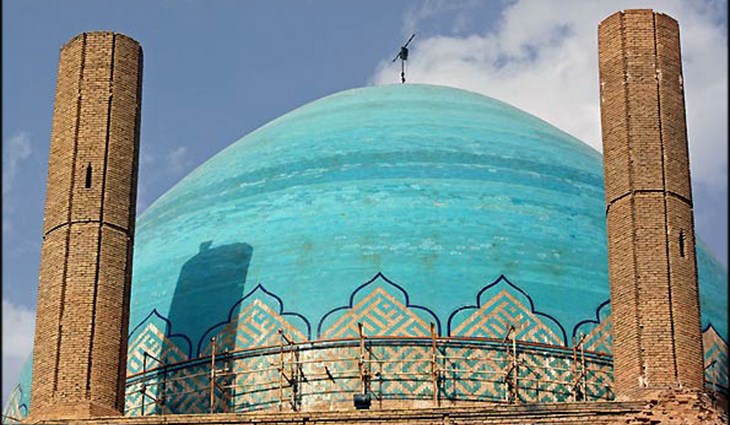
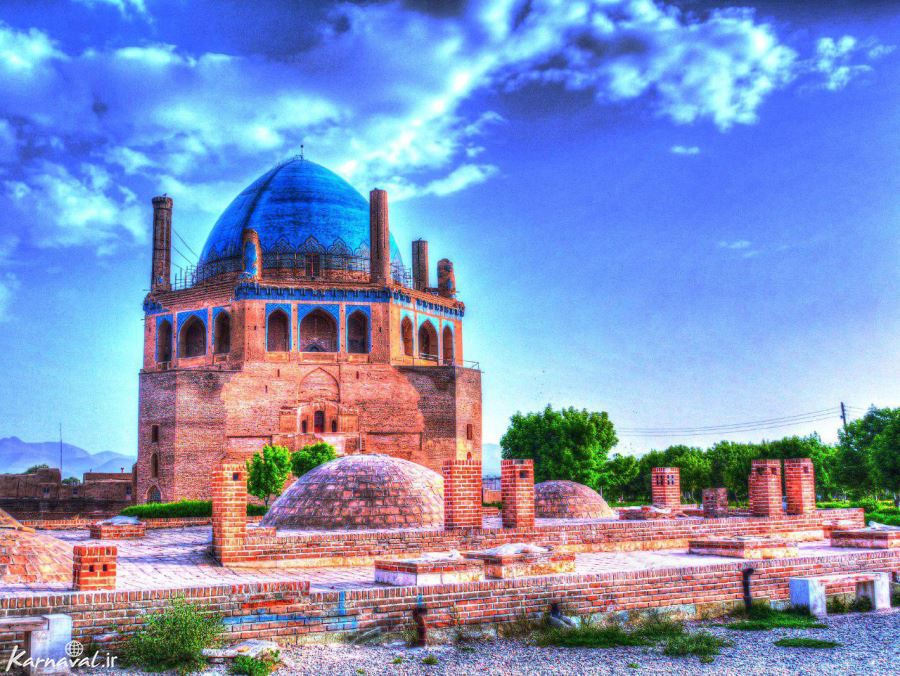 On the upper orsecond floor of this structure engravings can also be observed, one of these inscribed with the (Ayeh 125 Sureh Mobarakeh Baqareh) from the Holy Qoran inscribed in the "Kufic' script.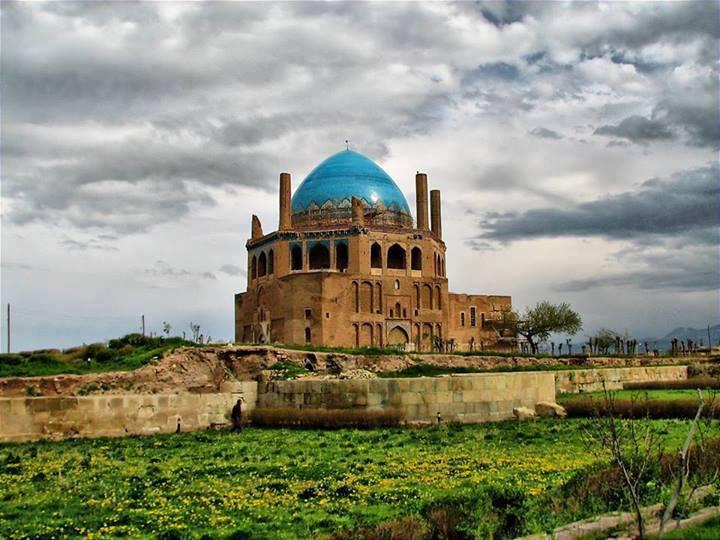
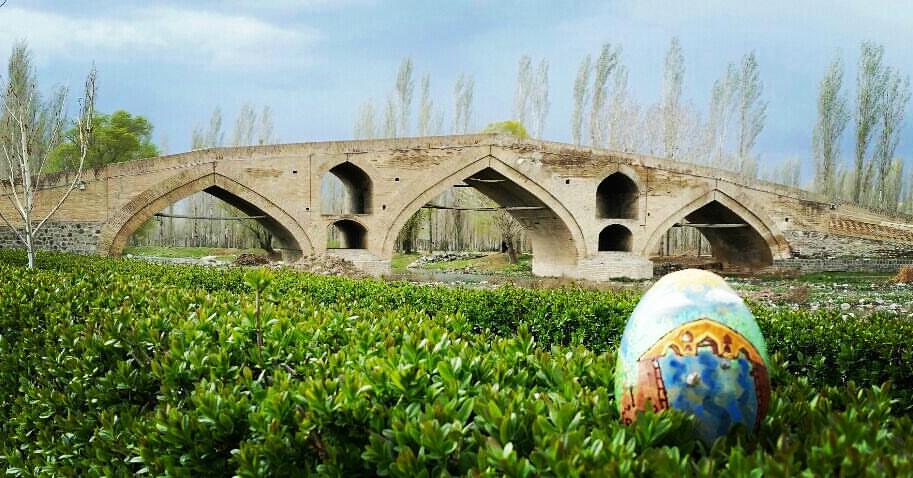 The century-old Mir Baha-ol-Din Bridge or Old Bridge is the oldest and largest standing bridge on the Zanjan River (Zanjan Roud) which was built in the Qajar era (1785-1925) by a merchant of the same name. This brick bridge is 100 meters long and 7 meters wide. The highest point of the bridge is 11 meters from the water. The bridge has a large middle arch with two smaller arches on either side. This bridge was registered as a National Heritage Site in 1977.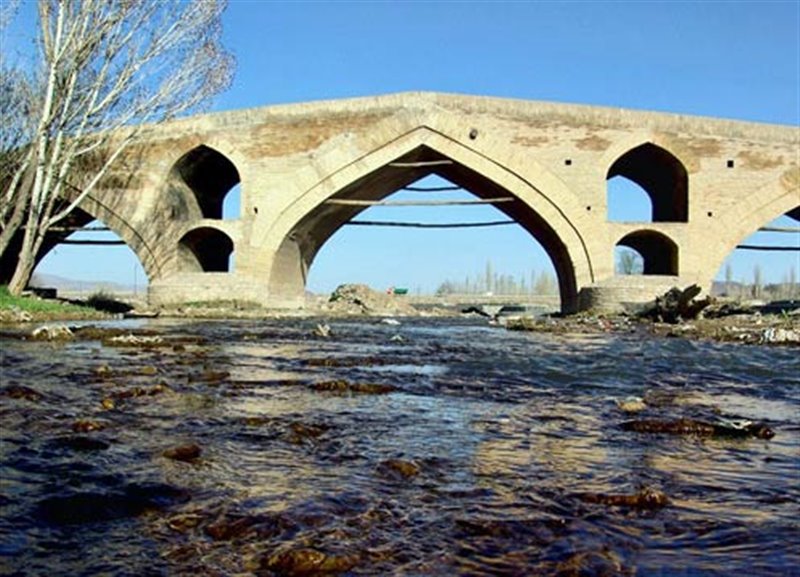
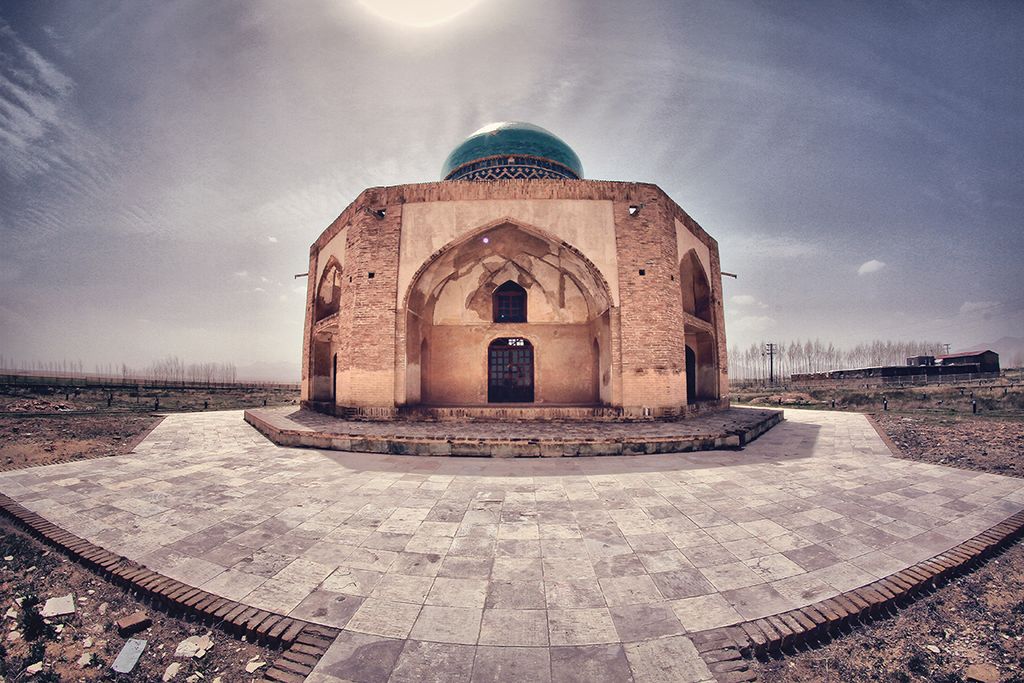 Mullah Hassan Kashi Mausoleum is an octagonal structure with a beautiful dome that sits on a square dome chamber, Located 2.5 kilometers south of the city of Soltaniyeh,. Inscriptions in the mausoleum suggest it was built towards the end of the rule of Safavid King Shah Tahmasp (1514-1576). This double-shell dome has tilework decorations, geometrical motifs and Kufic inscriptions. Brick and turquoise have been used to create parallel line decorations on the dome.
 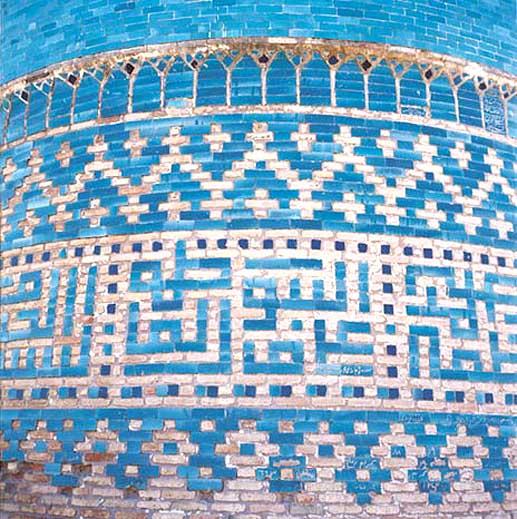 The stucco Muqarnas (ornamented vaulting) decorations inside the structure were added during the reign of Fath-Ali Shah Qajar (1772–1834). The underdome has Nastaleeq inscriptions and documents the names of its Qajar era renovators and architects. The mausoleum was previously enclosed by a stone wall.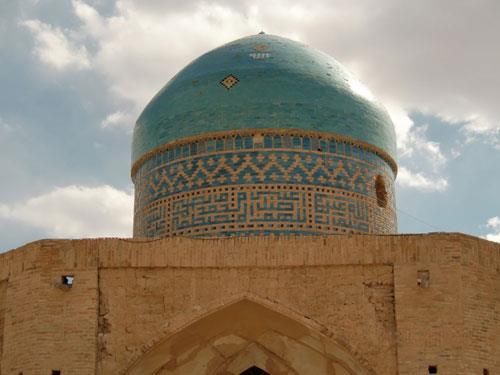
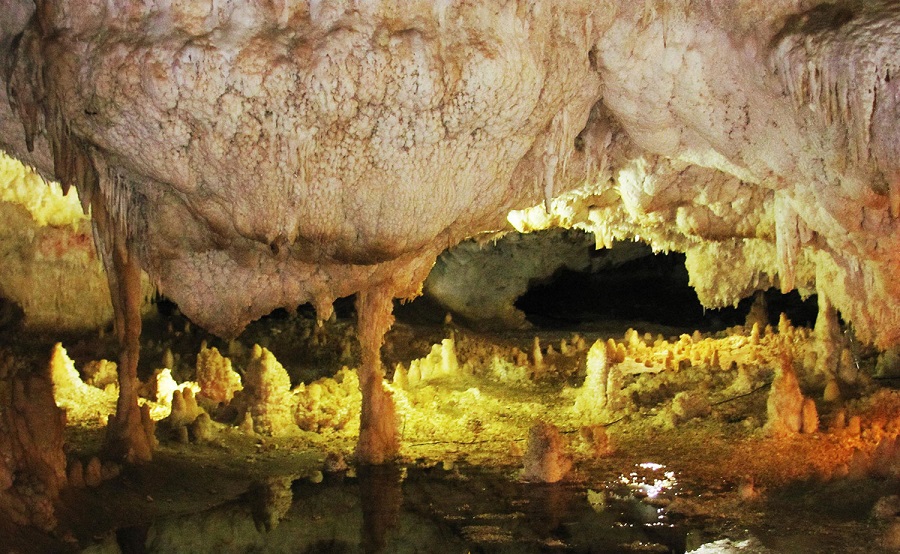 Kataleh Khor Cave is a cave located in the Zanjan Province and was discovered in the 20th century. It is located 140 kilometers south west of Zanjan, in the southern skirts of the Saghezloo mountains, and 410 kilometers from Tehran. The name, Katale Khor, means "Mount of Sun”. Geological studies in 1984 showed that the cave formation dates back to the Jurassic period. It is believed that the cave connects to Ali Sadr Cave.
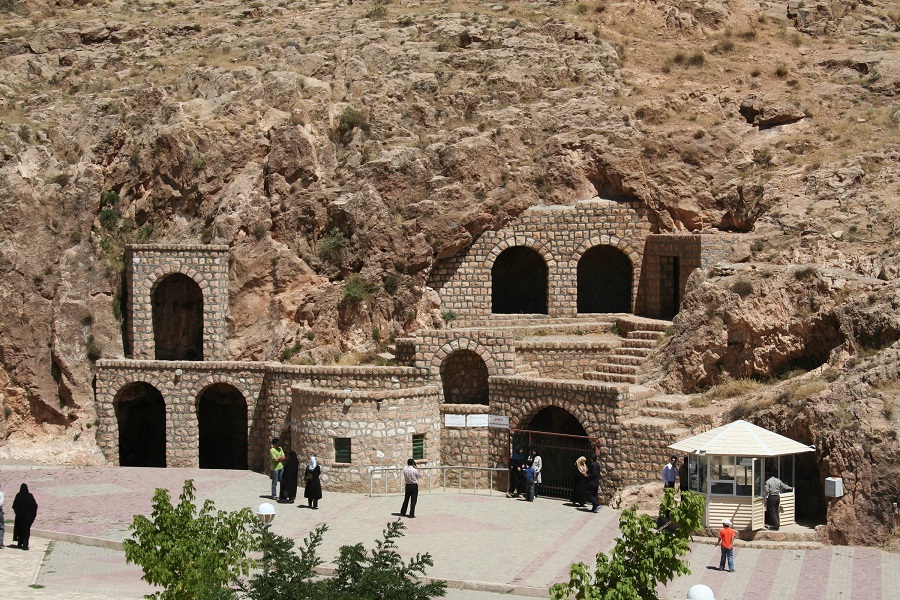 The Cave is divided into three main sections, cultural, leisure and sports. The cultural section is located on the southern part of the cave. Its main section is a large naturally built hall which is used to hold various events. The entrance to this hall is man made, however the actual hall itself is entirely natural. The leisure section is open to public for general view and is around 2 kilometers long. It has been said that, this length covers only 1/3 of total length of the cave. The sports section is exclusively used by cave explorers and rock climbers. It extends around 4 kilometers.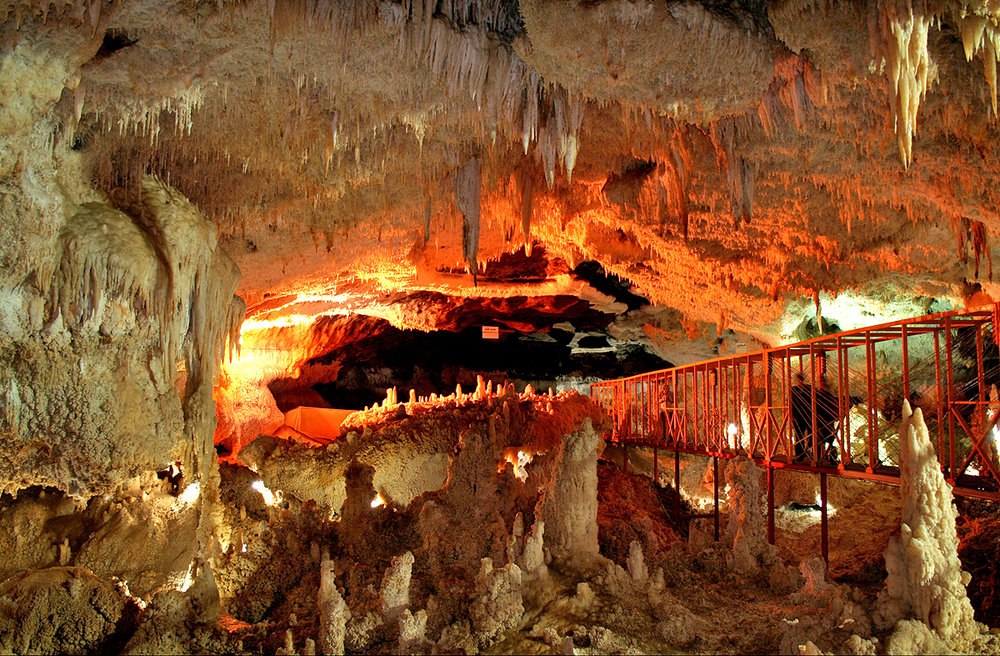
 Hi dear friends. I am NAVID TAHMASEBI (English instructor & Inbound manager of Tavrizh parvaz travel & tourism agency)and I was Born in Tabriz. This weblog is created to introduce IRAN for passengers from all around the World.