Tagh’e Bostan_Kermanshah
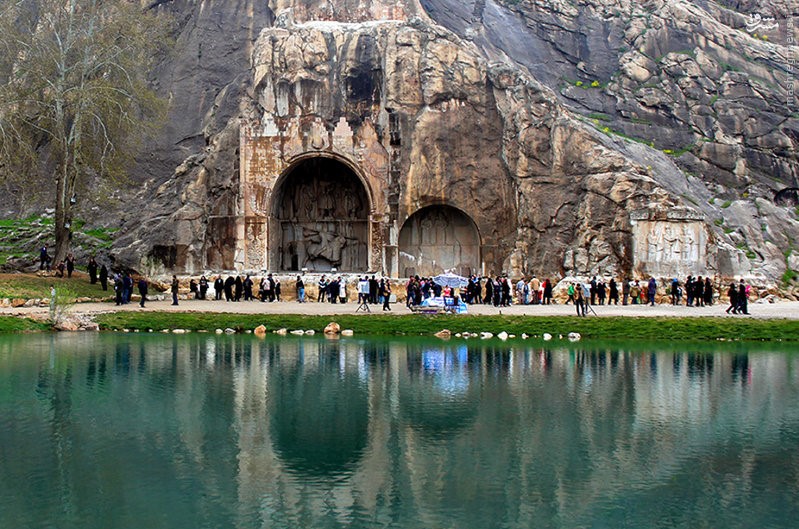 Tagh’e Bostan is a series of large rock reliefs from the Sassanid Era located 5 kilometers from the city center of Kermanshah. It is located in the heart of the Zagros Mountains, where it has endured almost 1,700 years of wind and rain. The carvings, some of the finest and best-preserved examples of Persian sculpture under the Sassanids, include representations of the investitures of Ardeshir II (379–383) and Shapur III (383–388). Like other Sassanid symbols, Tagh’e Bostan and its relief patterns accentuate power, religious tendencies, glory, honor, the vastness of the court, game and fighting spirit, festivity, joy, and rejoicing.
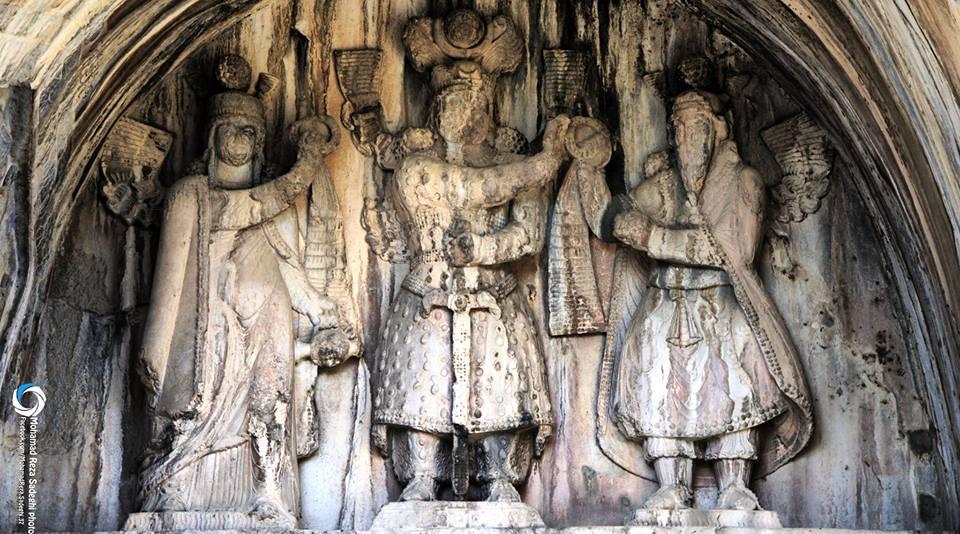 Sassanid Kings chose a beautiful setting for their rock reliefs along an historic Silk Road caravan route waypoint and campground. The reliefs are adjacent a sacred spring that empties into a large reflecting pool at the base of a mountain cliff. Tagh’e Bostan and its rock reliefs comprise two big and small arches. They illustrate the crowning ceremonies of Ardeshir I and his son, Shapur I, Shapur II and Khosro II. They also depict the hunting scenes of Khosro II.
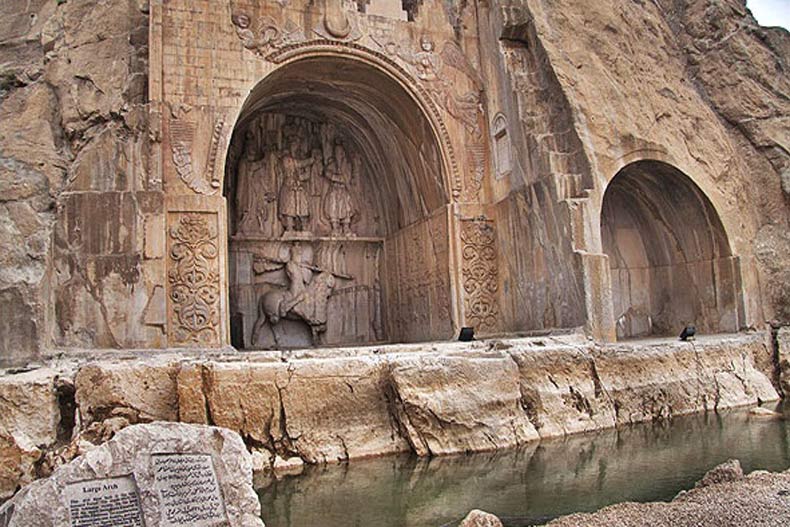 One of the most impressive reliefs inside the largest grotto or ivan is the gigantic equestrian figure of the Sassanid King Khosro II (591-628 CE) mounted on his favorite charger, Shabdiz. Both horse and rider are arrayed in full battle armor. The arch rests on two columns that bear delicately carved patterns showing the tree of life or the sacred tree. Above the arch and located on two opposite sides are figures of two winged angles with diadems. Around the outer layer of the arch, a conspicuous margin has been carved, jagged with flower patterns. The equestrian relief panel measures 7.45 meters across and 4.25 meters high.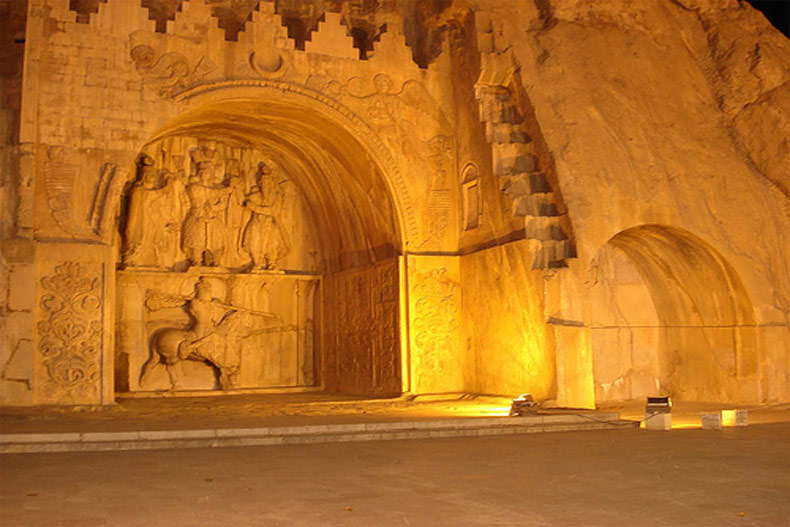
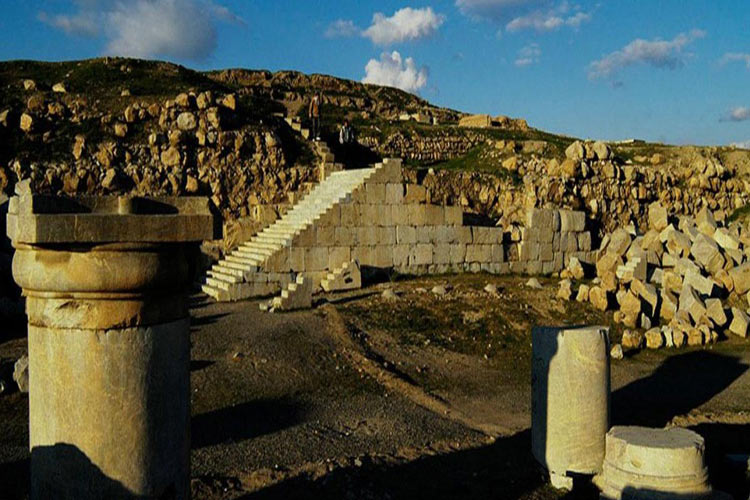 The Anahita Temple is the name of an archaeological site in Iran popularly thought to have been attributed to the ancient deity Anahita. It is located at Kangavar in Kermanshah Province and is thought to be built by Achaemenian Emperor Ardeshir II (Artaxerxes II), 404 BC to 359 BC.The remains at Kangavar reveal an edifice that is Hellenistic in character, and yet display Persian architectural designs.
 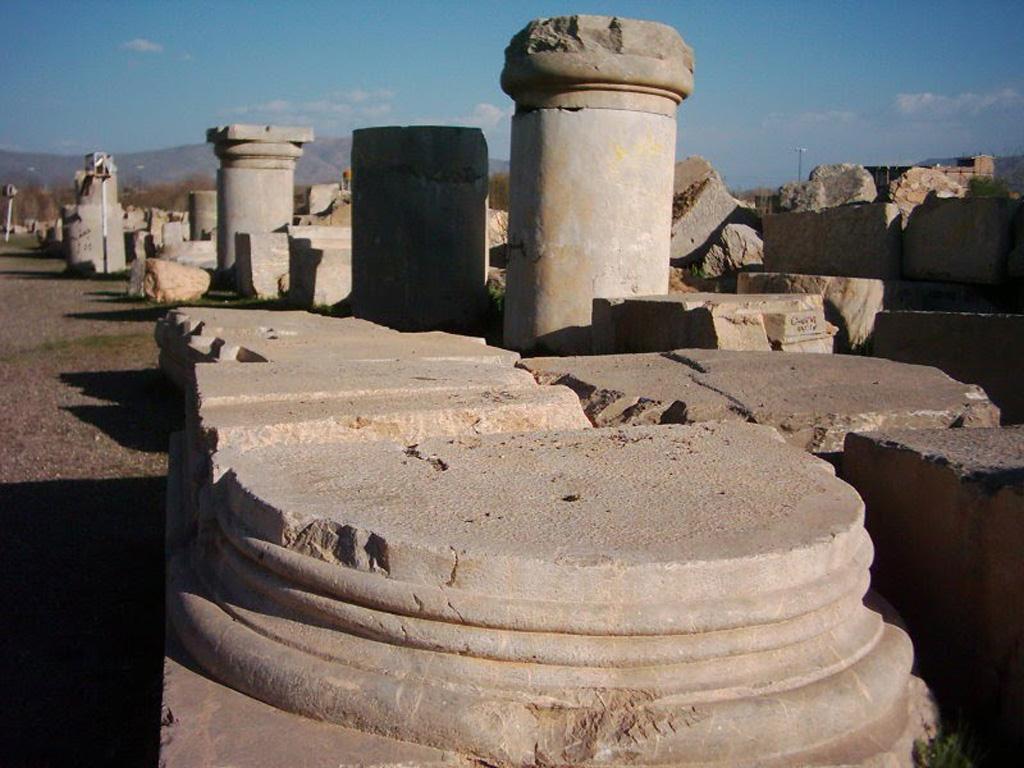 The plinth's enormous dimensions for example, which measure just over 200m on a side, and its megalithic foundations, which echo Achaemenid stone platforms, "constitute Persian elements". This is thought to be corroborated by the "two lateral stairways that ascend the massive stone platform recalling Achaemenid traditions", particularly that of the Apadana Palace at Persepolis.
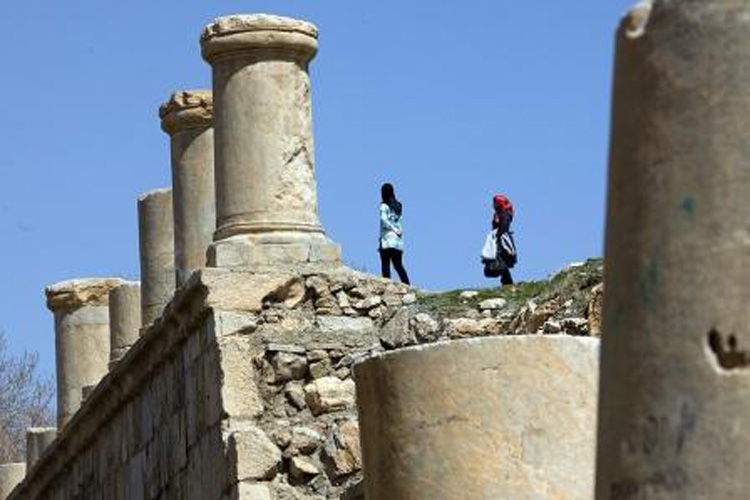 The main structure of the Anahita Temple is a quadrilateral one. Its ramparts being 230 m. in length, and its thickness in most of the parts is 18 m. which reveals the archaic grandeur and magnificence of this structure. The stairway of the temple is bilateral and closely attached to the wall. The difference between the lowest and highest point of the structure is 30 m. and is in a form of steps, similar to the Achaemenian structures. At the foot of the eastern wall of the structure is a cemetery which is related to the Parthian era. It is noted that the deceased have been buried in such a way to face the Anahita structure.
 Hi dear friends. I am NAVID TAHMASEBI (English instructor & Inbound manager of Tavrizh parvaz travel & tourism agency)and I was Born in Tabriz. This weblog is created to introduce IRAN for passengers from all around the World.