The stone lion_Hamedan
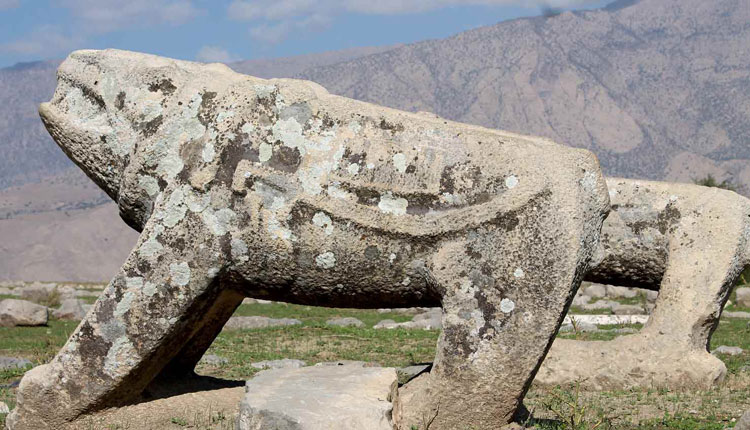 The stone lion of Hamedan (Shir'e Sangi) is a historical monument in Hamedan. The stone lion, one part of the 'Lion’s Gate', sits on a hill where a Parthian era cemetery is said to have been located. When first built, this statue had a twin counterpart for which they both constituted the old gate of the city. The gates were demolished in 931CE as the Daylamids took over the city. Currently this statue is located in the park and square of Sang Shir and is held in great respect by the people.
 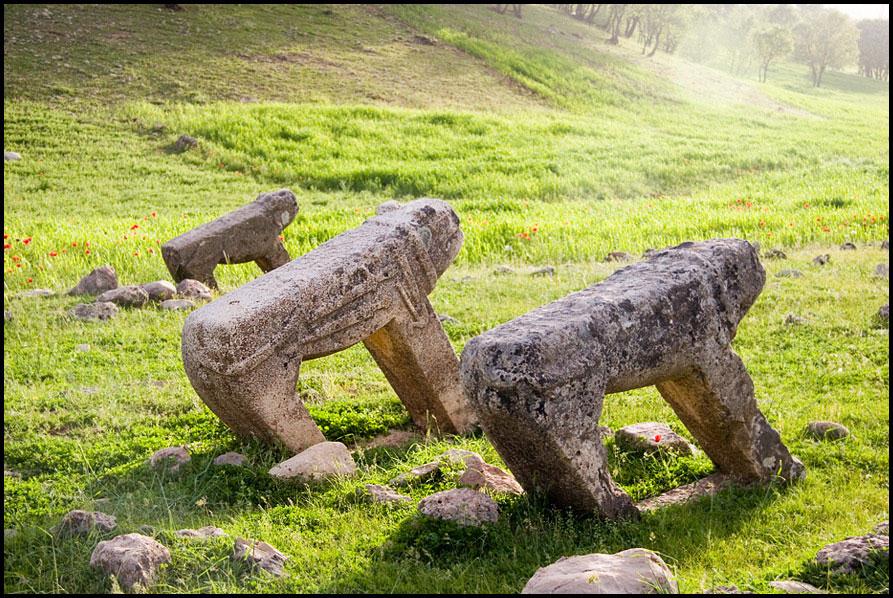 It is 2.5 meters long, 1.15 meters wide, and 2.2 meters high in its front part and its present form, represents the battered image of a legless, couchant lion carved out of yellow sandstone.There are various theories as to the history of this statue. While some accounts denote the statue to the first Iranian dynasty, the Medes, others attribute it to the Parthian dynasty since it was found over a mound which consisted of a Parthian cemetery.
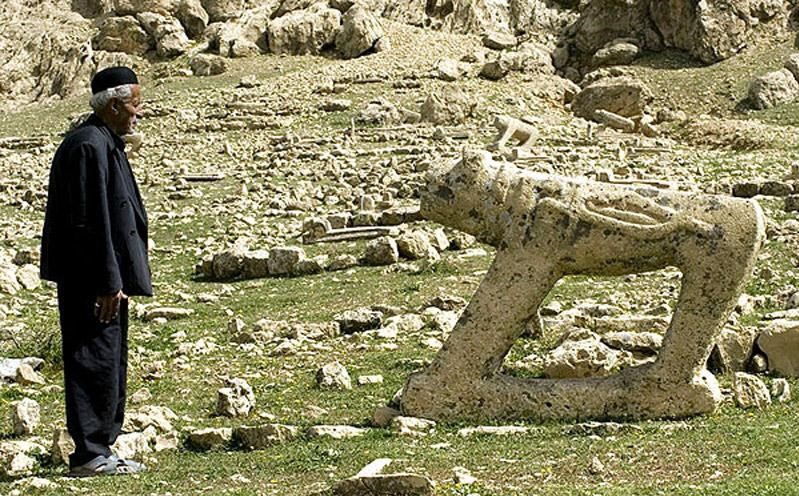 Iran's Cultural Heritage Organization reports that the lions were first thought to have been built by the orders of Alexander the Great to commemorate the death of his close companion Hephaestion.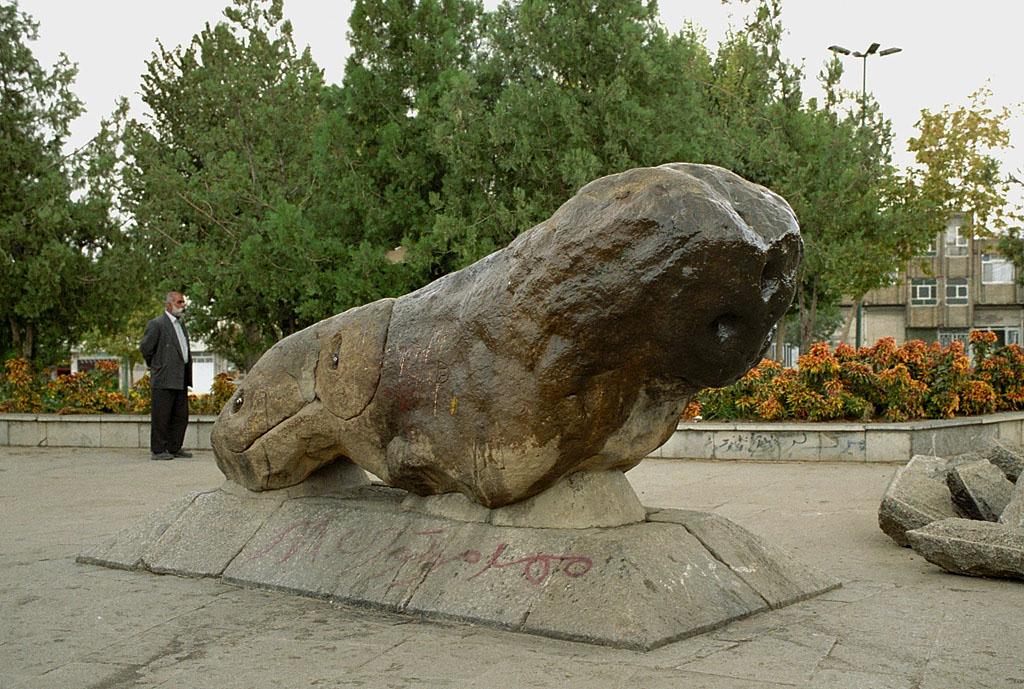
 Hi dear friends. I am NAVID TAHMASEBI (English instructor & Inbound manager of Tavrizh parvaz travel & tourism agency)and I was Born in Tabriz. This weblog is created to introduce IRAN for passengers from all around the World.